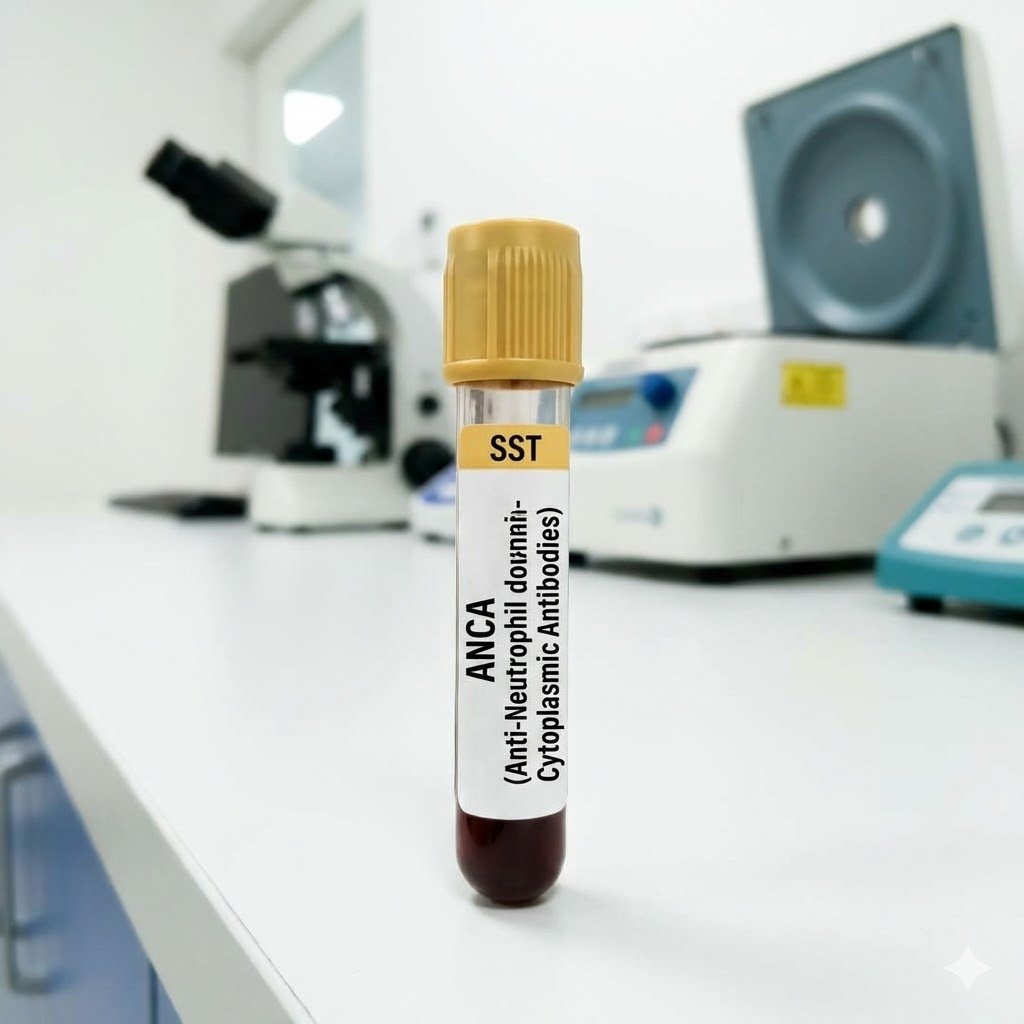

Description
Overview: Calcitonin is a hormone produced by the parafollicular cells (C-cells) of the thyroid. In healthy individuals, calcitonin levels are usually very low. Its main biological function involves regulating calcium and phosphorus levels, but in clinical diagnostics, it serves as a highly sensitive marker for abnormal C-cell growth.
Clinical Significance:
-
Medullary Thyroid Carcinoma (MTC): This is the most important use of the test. Significantly elevated levels are a strong indicator of MTC.
-
Treatment Monitoring: After the removal of the thyroid gland (thyroidectomy) for cancer, calcitonin levels should fall to undetectable levels. Rising levels indicate a recurrence of the cancer.
-
Family Screening: It is used to screen family members of patients with MEN2 (a genetic syndrome) to detect MTC in its earliest, most treatable stages.
-
C-Cell Hyperplasia: Elevated levels can also be seen in benign overgrowth of C-cells, often a precursor to cancer.
When is this test recommended?
-
To evaluate a patient with a thyroid nodule or lump.
-
To screen patients with a family history of thyroid cancer or MEN2.
-
To monitor patients who have been treated for Medullary Thyroid Cancer.
-
When a patient presents with symptoms of advanced MTC, such as unexplained diarrhea or facial flushing.
Sample Requirements:
-
Specimen: Serum.
-
Container: Gold Top (SST) or Red Top Tube.
-
Preparation: Fasting (overnight) is typically required to get an accurate baseline level.
-
Handling: This hormone is unstable; the sample often needs to be kept cold (on ice) and processed immediately.