Description
Overview:
While a serum calcium test measures the calcium circulating in your blood at a single moment, the Urine Calcium test measures how much calcium your kidneys are filtering out of your body over a period of time. This test is crucial for understanding how your body absorbs, uses, and excretes calcium.
Clinical Significance: The amount of calcium in urine varies greatly depending on diet and underlying conditions.
High Urine Calcium (Hypercalciuria): This is a primary risk factor for developing calcium-based kidney stones. It can also indicate that bones are losing calcium (as in osteoporosis) or overactivity of the parathyroid glands.
Low Urine Calcium (Hypocalciuria): May suggest malabsorption issues (not getting enough calcium from diet), vitamin D deficiency, or hypoparathyroidism.
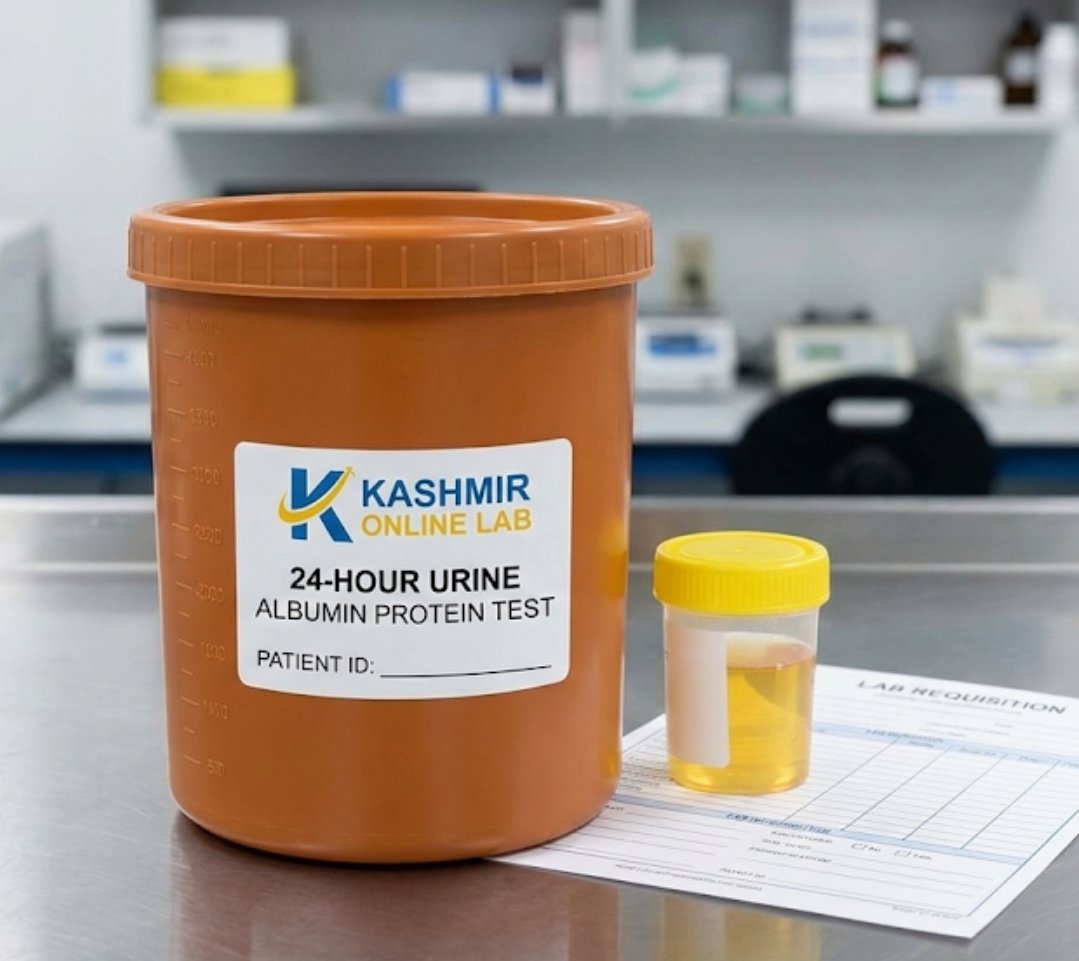
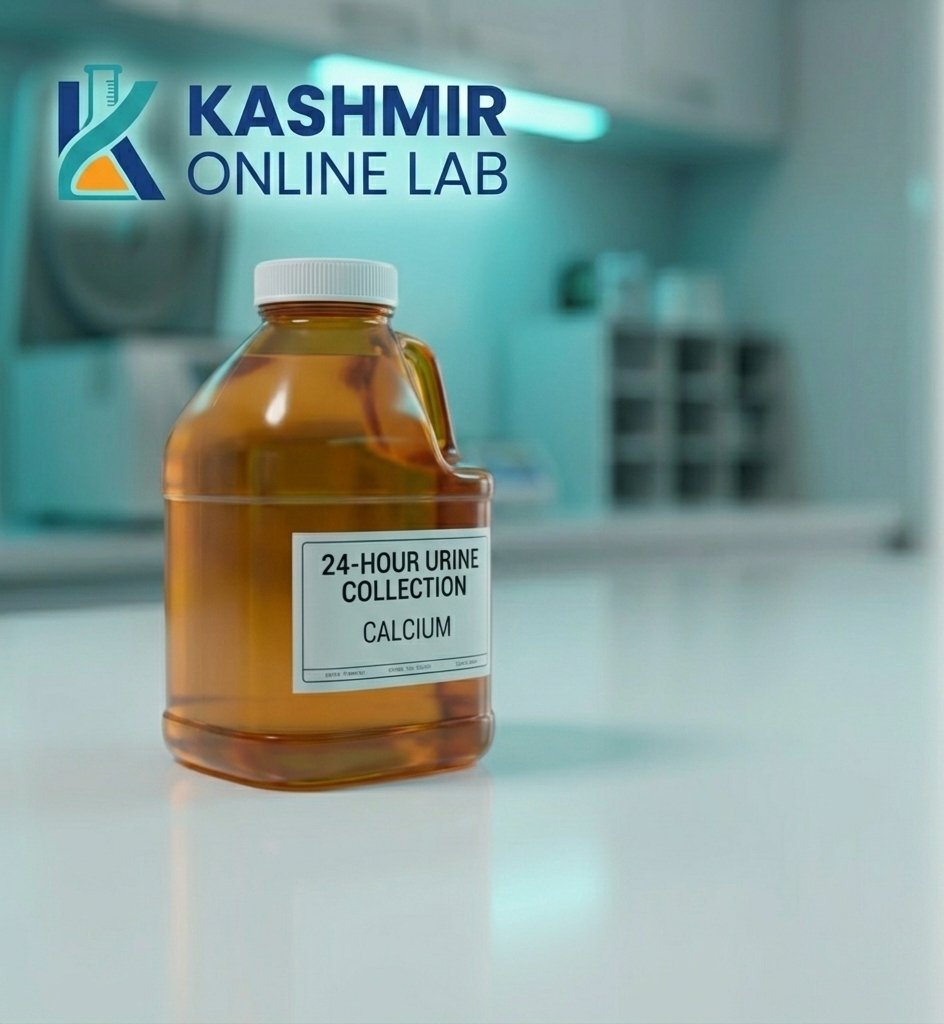
When is this test recommended? Kidney Stone Evaluation: To determine if high urine calcium is causing recurrent stones. Bone Health Assessment: To evaluate osteoporosis or other bone disorders. Parathyroid Monitoring: Often ordered alongside serum calcium and PTH tests to fully understand parathyroid function. Sample Requirements: Specimen Type: 24-Hour Urine Collection (Gold Standard): Provides the most accurate picture of daily calcium excretion. Random (Spot) Urine: Sometimes used for a quick “Calcium/Creatinine Ratio” screening, particularly in children. Container: Large, clean laboratory collection jug (typically 3-4 liters, often amber-colored). Preparation (for 24-Hour Collection): Patients are usually instructed to maintain their normal diet but avoid supplements intended to increase calcium for a few days prior. On the morning of the test, discard the very first urination. Collect all subsequent urine for the next 24 hours in the provided jug. Keep the jug cool (refrigerated or on ice) during the collection period