Description
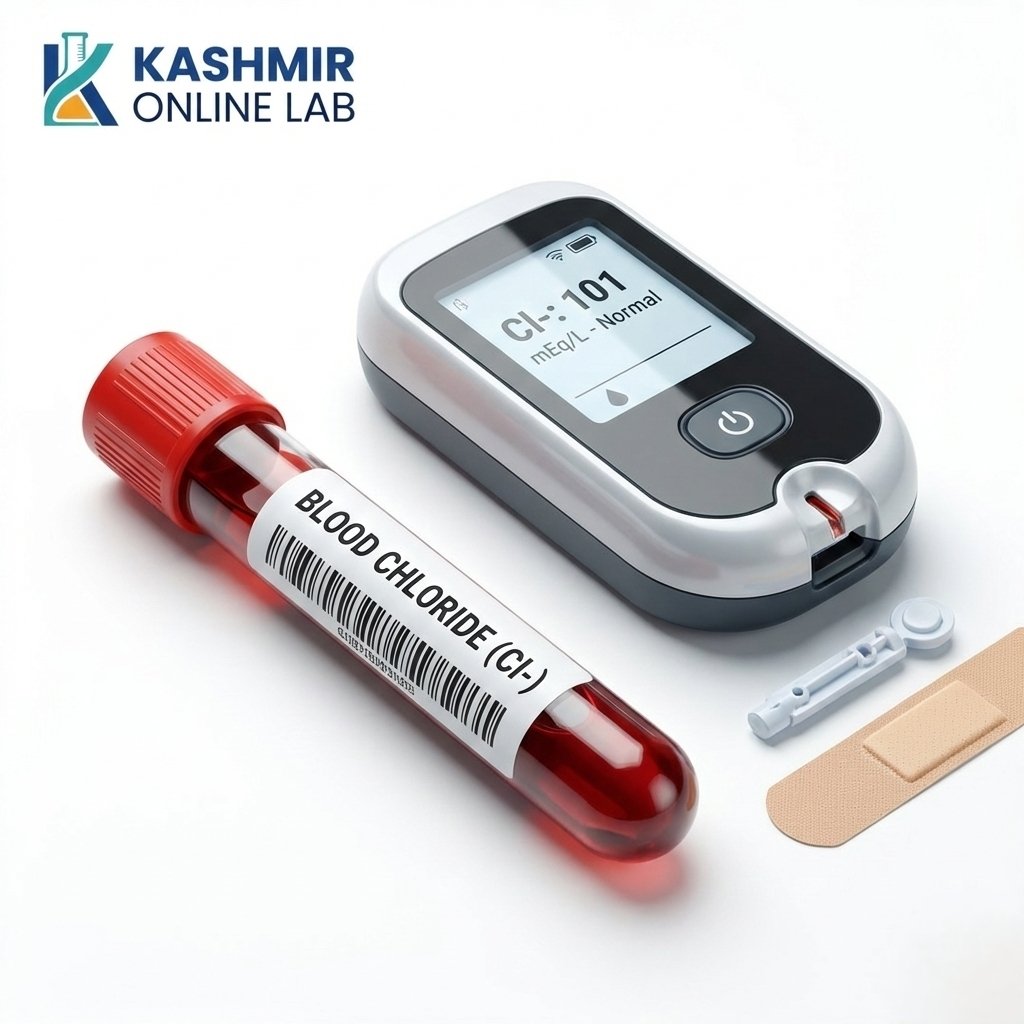
The Chloride test measures the level of chloride in your blood. Chloride is a key electrolyte that works with sodium, potassium, and carbon dioxide to maintain the proper balance of body fluids and essential acid-base (pH) balance. It is often ordered as part of a routine “Electrolyte Panel” or “Basic Metabolic Panel.”
Why is it done?
Doctors recommend this test to:
- Monitor Health: As part of a routine checkup to screen for fluid or acid-base imbalances.
- Diagnose Conditions: To help identify causes of high blood pressure, heart failure, or kidney disease.
- Check Symptoms: If you are experiencing prolonged vomiting, diarrhea, weakness, or trouble breathing (which can cause chloride loss).
Test Details:
- Sample Type: Blood (Serum)
- Preparation: No special preparation (fasting) is usually required unless this test is part of a larger panel (like a Lipid Profile or Sugar test) that requires it.
- Results Turnaround: Same-day reporting is typically available.
Normal Reference Range:
- Adults: 96 – 106 mEq/L (milliequivalents per liter)
- Note: Reference ranges may vary slightly between different laboratories.
Understanding Results:
- High Levels (Hyperchloremia): May indicate dehydration, kidney issues, or metabolic acidosis (too much acid in the blood).
- Low Levels (Hypochloremia): May be seen in conditions like congestive heart failure, prolonged vomiting, or chronic lung disease.