Description
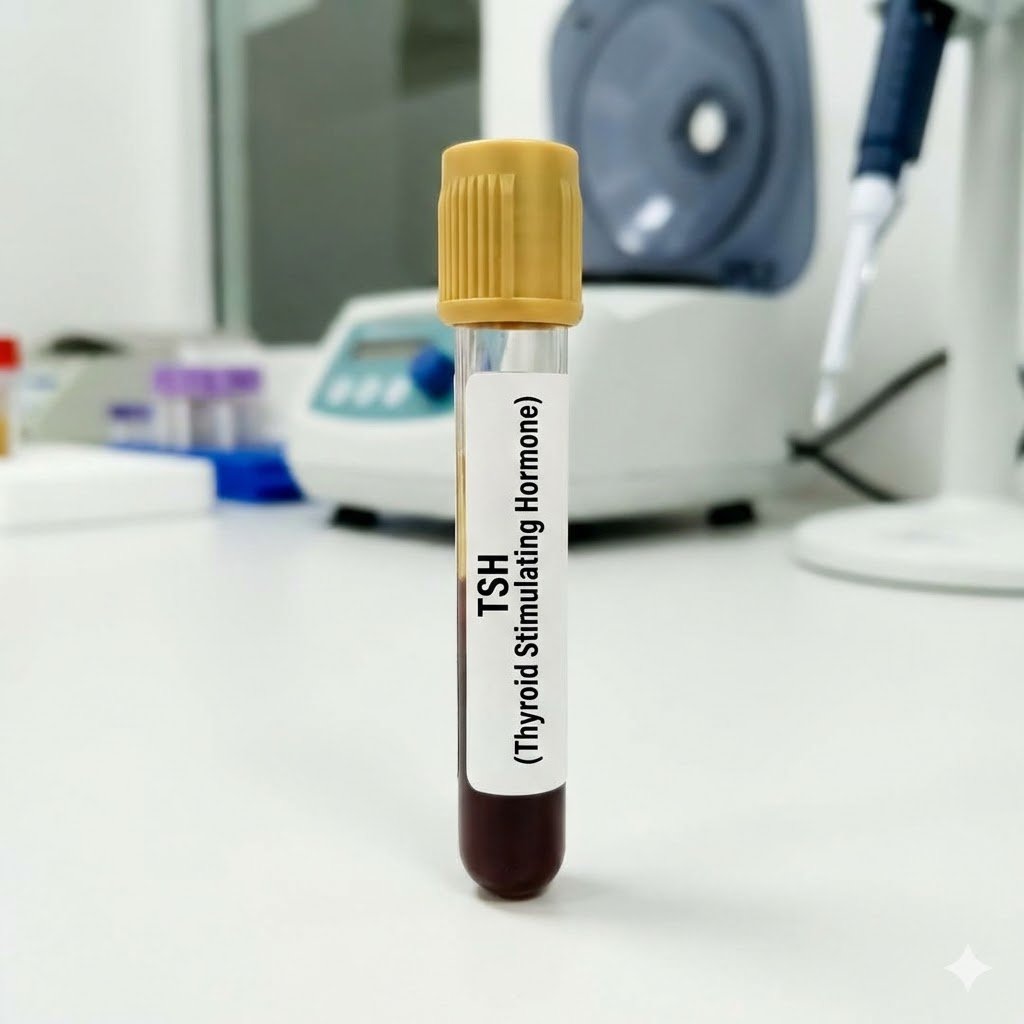
The TSH Test is the primary screening tool for thyroid health. It measures the level of Thyroid Stimulating Hormone to detect Hypothyroidism (underactive thyroid) or Hyperthyroidism (overactive thyroid). It is the first step in investigating symptoms like unexplained weight changes, fatigue, hair loss, and mood swings.
Overview: Thyroid Stimulating Hormone (TSH) is produced by the pituitary gland in the brain, not the thyroid itself. Its job is to tell the thyroid gland to release hormones (T3 and T4) that regulate metabolism. TSH levels function like a thermostat:
-
If thyroid hormone levels are too low, the pituitary releases more TSH (to stimulate production).
-
If thyroid hormone levels are too high, the pituitary releases less TSH (to slow production).
Clinical Significance:
-
High TSH: Usually indicates Primary Hypothyroidism (underactive thyroid). The thyroid is sluggish, so the pituitary is “shouting” (producing excess TSH) to get it to work. Symptoms include weight gain, fatigue, cold intolerance, and dry skin.
-
Low TSH: Usually indicates Hyperthyroidism (overactive thyroid). The thyroid is producing too much hormone, so the pituitary shuts down TSH production. Symptoms include weight loss, rapid heartbeat, anxiety, and heat intolerance.
-
Monitoring: TSH is essential for patients on thyroid medication (like Levothyroxine) to ensure their dosage is correct.
When is this test recommended?
-
Screening: Routine screening for women over 60 or those with a family history of thyroid disease.
-
Symptoms: Investigation of fatigue, depression, constipation, palpitations, or menstrual irregularities.
-
Pregnancy: Thyroid health is critical for fetal development, so screening is often done in the first trimester.
-
Newborns: All newborns are screened for congenital hypothyroidism.
Sample Requirements:
-
Specimen: Serum (Blood).
-
Container: Gold Top (SST) or Red Top Tube.
-
Preparation: Fasting is not strictly required, but blood drawn in the morning is often preferred as TSH levels can fluctuate throughout the day (circadian rhythm).