
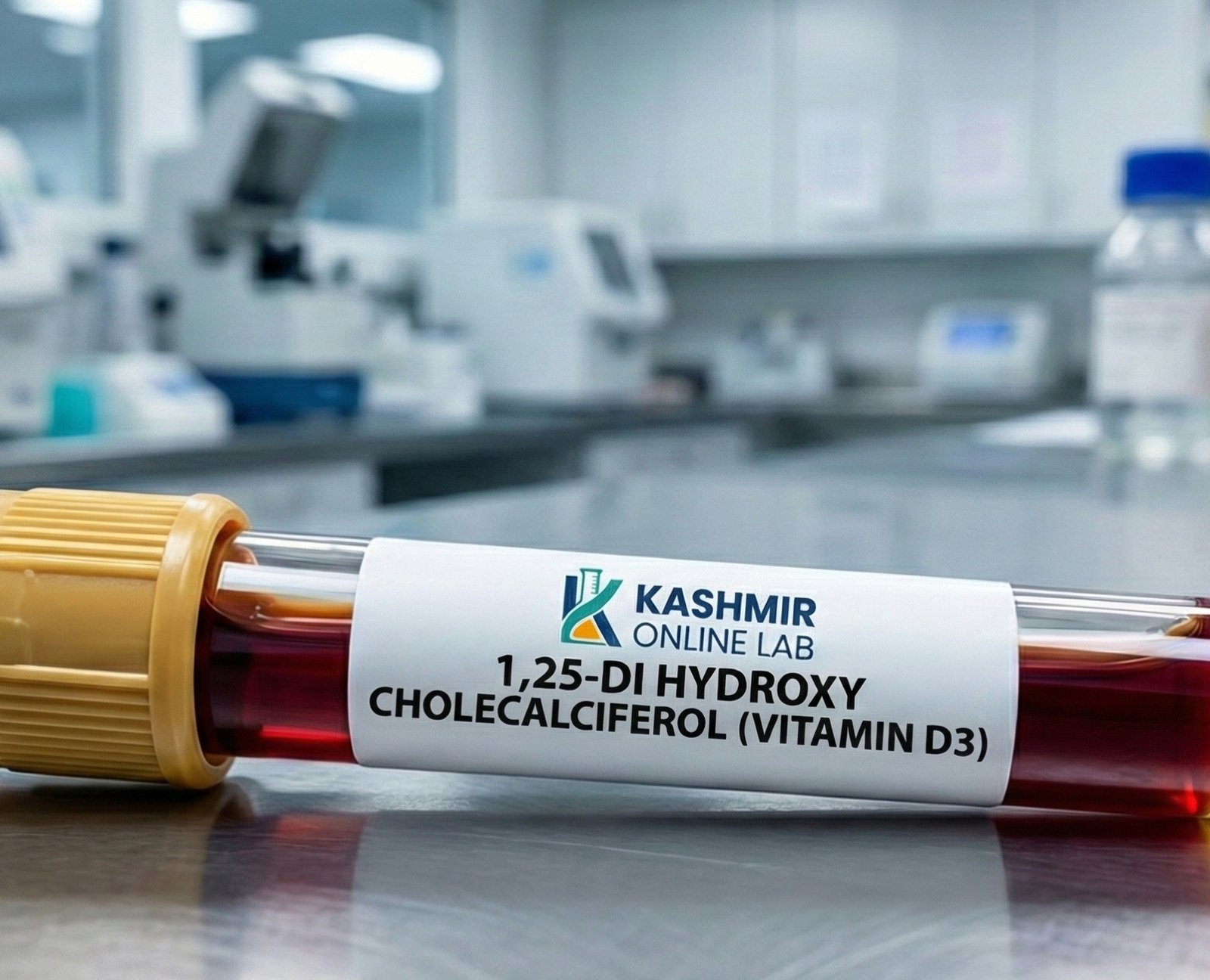
Description
1,25-dihydroxycholecalciferol, also known as calcitriol, is the most biologically active form of vitamin D, acting as a hormone to regulate calcium and phosphate levels, crucial for bone health, immune function, and cell growth, primarily produced in the kidneys from 25-hydroxyvitamin D (calcidiol) and essential for calcium absorption, though the standard vitamin D screening test measures calcidiol, while calcitriol tests are used for specific bone or kidney disorders.
-
Calcium Regulation:
It significantly increases intestinal absorption of calcium and phosphate and reduces their excretion by the kidneys, keeping levels stable in the blood.
-
Bone Health:
By controlling calcium and phosphorus, it helps in bone mineralization and prevents conditions like rickets and osteoporosis.
-
Hormonal Action:
It binds to vitamin D receptors (VDR) in cells, influencing gene expression, and also suppresses the production of parathyroid hormone (PTH).
-
Immune System:
It plays a role in modulating immune responses, suppressing inflammation, and inhibiting certain immune cells (Th1).
-
Formation:
Vitamin D from sunlight or diet (cholecalciferol) is converted in the liver to 25-hydroxyvitamin D (calcidiol), which is then converted in the kidneys by the enzyme 1α-hydroxylase to the active calcitriol.
-
Standard Test:
The routine blood test for vitamin D deficiency checks 25-hydroxyvitamin D levels, reflecting total body stores.
-
Specialized Test:
The 1,25-dihydroxyvitamin D test (calcitriol) is used to investigate specific issues with kidney function, parathyroid glands, or complex bone diseases, rather than general deficiency.
-
Medication:
Calcitriol is used therapeutically to treat low calcium (hypocalcemia) and bone diseases.
-
Diagnosis:
Abnormal levels can point to kidney disease, disorders of the parathyroid glands, or specific vitamin D metabolism problems.