Description
24-Hour Urinary Creatinine Test
Overview
The 24-Hour Urinary Creatinine Test is a diagnostic analysis that measures the total amount of creatinine excreted in urine over a full 24-hour period. Creatinine is a chemical waste product produced by normal muscle metabolism and is typically filtered from the blood by the kidneys and excreted in urine at a relatively constant rate. Because this rate is stable, measuring 24-hour creatinine is a critical way to assess kidney function and verify the accuracy of urine collections for other tests.
Purpose & Clinical Significance
This test is performed for several key medical reasons:
- Assessing Kidney Function: It helps estimate the Glomerular Filtration Rate (GFR) to see how well the kidneys are filtering waste from the blood.
- Creatinine Clearance: It is often paired with a serum (blood) creatinine test to calculate “Creatinine Clearance,” a precise measure of kidney filtration efficiency.
- Verifying Collection Accuracy: Because daily creatinine excretion is linked to muscle mass and is generally consistent, it acts as a “benchmark” to ensure a patient truly collected a full 24 hours’ worth of urine without missing samples.
- Evaluating Stone Disease: It is used in workups for kidney stones to normalize results for other minerals like calcium or oxalate.
Procedure: How to Collect
A successful test relies entirely on a strict collection protocol. Missing even one sample can invalidate the results.
- Start Time (Day 1): Begin at a specific time (e.g., 8:00 AM). Urinate into the toilet and flush this first void. Do not save it. Record this time as the “Start Time”.
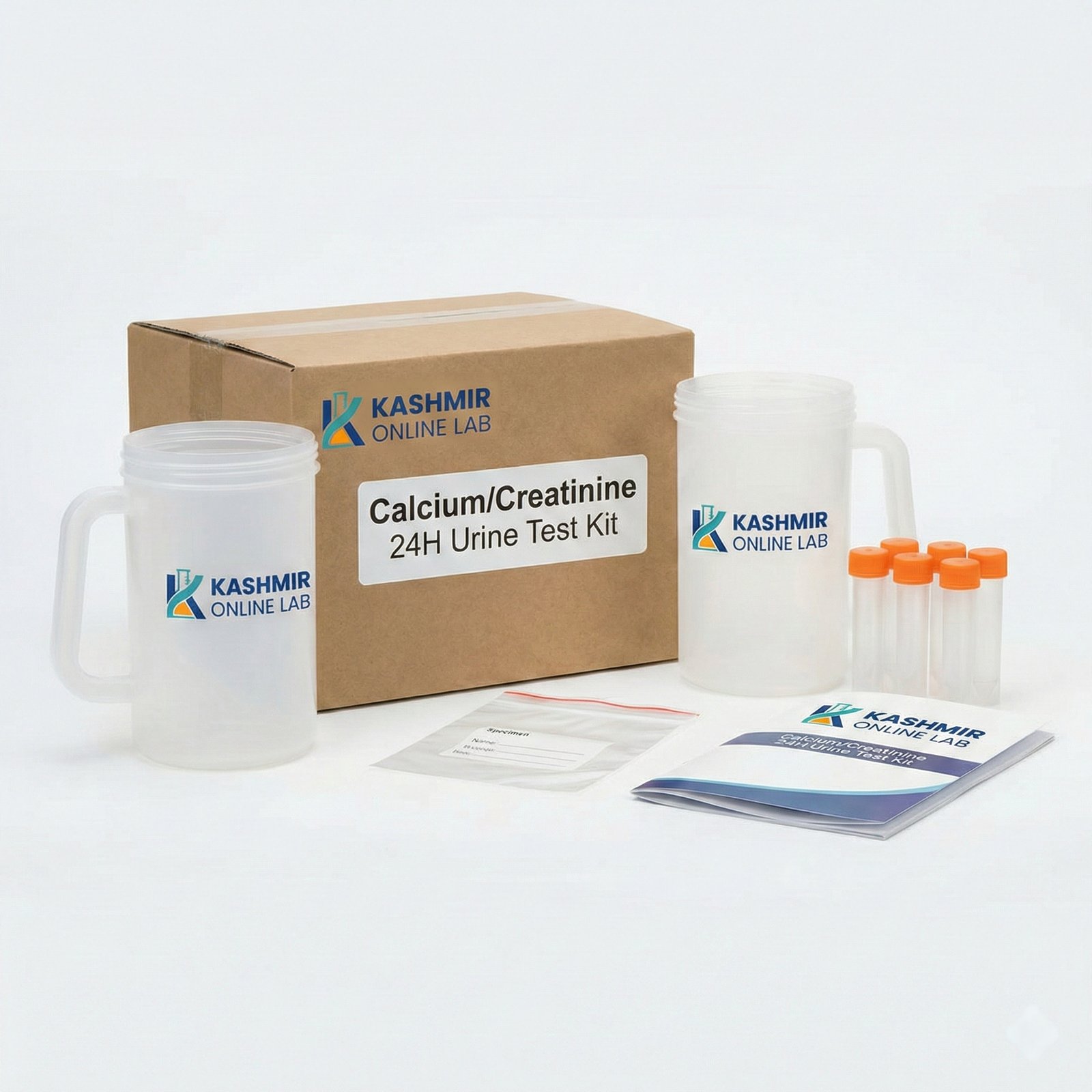
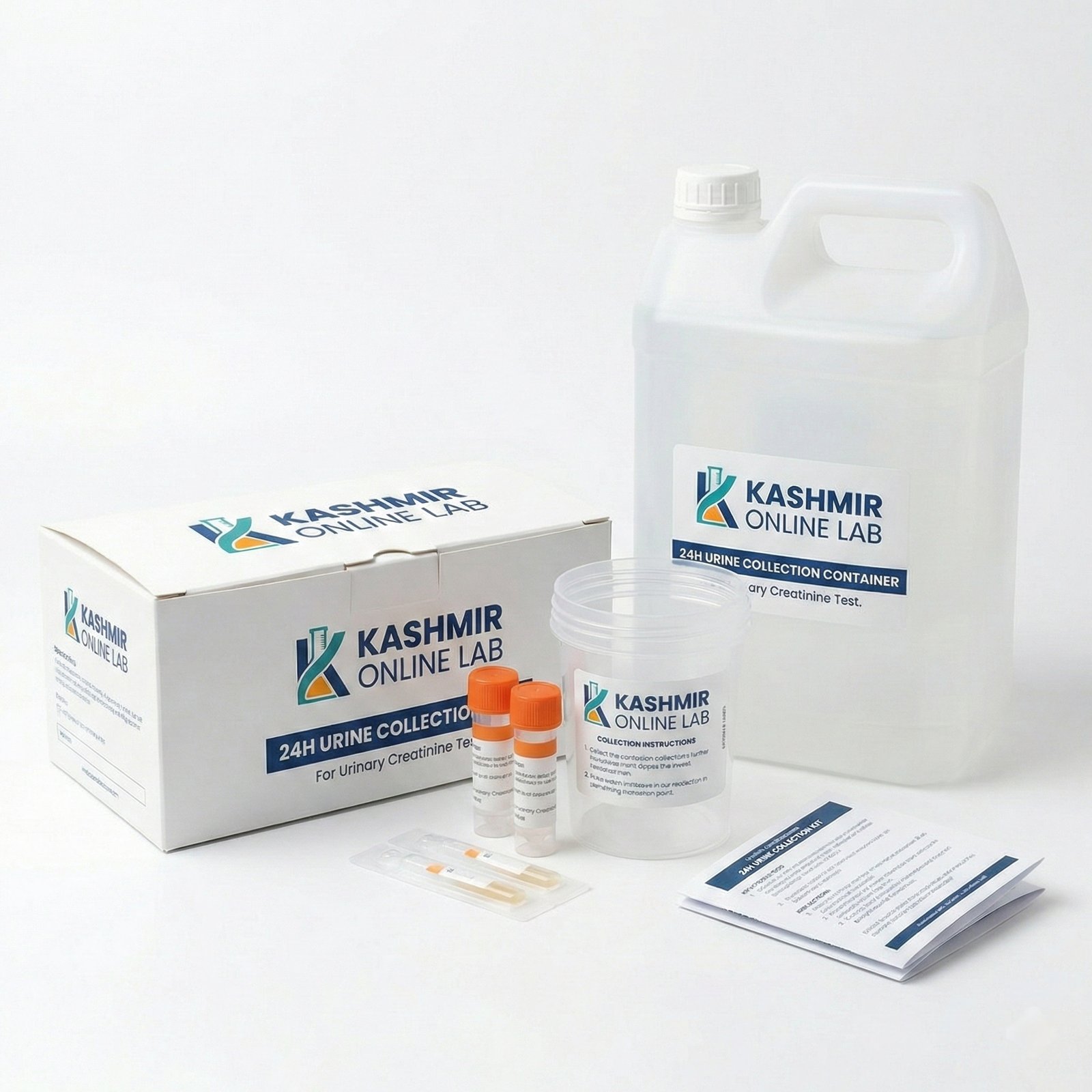
- Collection Period: For the next 24 hours, collect all urine passed into the provided container. You may need to use a clean “hat” or catch-cup to transfer urine into the main jug.
- Storage: Keep the container cool (refrigerated or on ice) throughout the collection period to prevent bacterial growth.
- Finish Time (Day 2): At the exact same time as the Start Time (e.g., 8:00 AM the next day), urinate one last time and add this final void to the container. This completes the test.
Reference Ranges
Normal values vary by age, gender, and muscle mass. General reference ranges for 24-hour excretion are:
- Adult Men: Approx. 955 – 2,936 mg/day (or 14–26 mg/kg/day).
- Adult Women: Approx. 601 – 1,689 mg/day (or 11–20 mg/kg/day).
Note: Ranges vary between laboratories; always consult the specific lab’s reference guide.
Interpreting Results
- High Levels: May indicate high muscle mass, a diet rich in meat/protein, intense physical exercise, or early-stage diabetes.
- Low Levels: May indicate kidney damage/failure, low muscle mass (e.g., in elderly patients or those with malnutrition), or an incomplete urine collection (missing some voids during the 24 hours).
Factors Affecting Results
- Diet: Eating large amounts of cooked meat can temporarily increase creatinine levels.
- Medications: Certain drugs (like cimetidine or cephalosporins) can interfere with the test.
- Improper Collection: The most common error is failing to collect all urine or mis-timing the start/end voids.