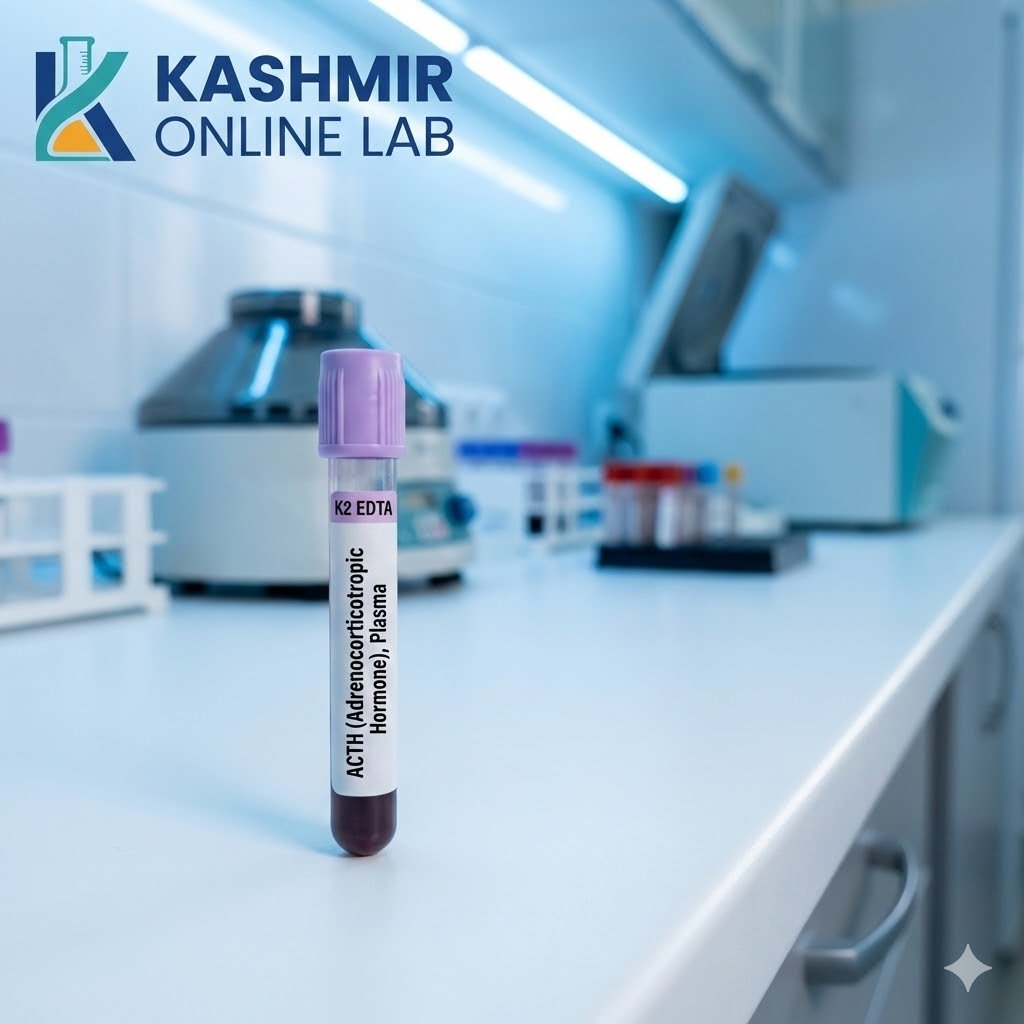
Description
Overview: Adrenocorticotropic Hormone (ACTH) is a polypeptide tropic hormone produced and secreted by the anterior pituitary gland. Its principal function is to stimulate the adrenal cortex to secrete glucocorticoids (mainly cortisol). The levels of ACTH change throughout the day (diurnal variation), typically peaking in the early morning (6–8 AM) and falling to their lowest point in the evening.
Clinical Significance:
-
Adrenal Insufficiency (Addison’s Disease): High ACTH levels with low cortisol indicate that the adrenal glands are damaged (Primary Adrenal Insufficiency). Low ACTH with low cortisol suggests a pituitary problem (Secondary Adrenal Insufficiency).
-
Cushing’s Syndrome: This condition involves excess cortisol. If ACTH is also high, it suggests a pituitary tumor (Cushing’s Disease) or an ACTH-producing tumor elsewhere. If ACTH is low, the excess cortisol is likely coming directly from an adrenal tumor.
- Hormone Rhythm: Because ACTH levels fluctuate naturally, tests are usually drawn early in the morning to get the most accurate baseline.
When is this test recommended?
-
To evaluate symptoms of too much cortisol (weight gain, rounded face, fragile skin, high blood pressure).
-
To evaluate symptoms of too little cortisol (fatigue, low blood pressure, weight loss, skin darkening).
-
To monitor the effectiveness of treatment for pituitary or adrenal disorders
Sample Requirements (Critical):
-
Specimen: Plasma.
- Container: Lavender Top (EDTA) Tube. (Note: Unlike most other tests you have requested, ACTH cannot be tested in a Gold/Serum tube because the hormone degrades too quickly).
- Preparation: Fasting is usually required (overnight). The sample often needs to be placed on ice immediately after collection and centrifuged quickly to prevent the hormone from breaking down