Description
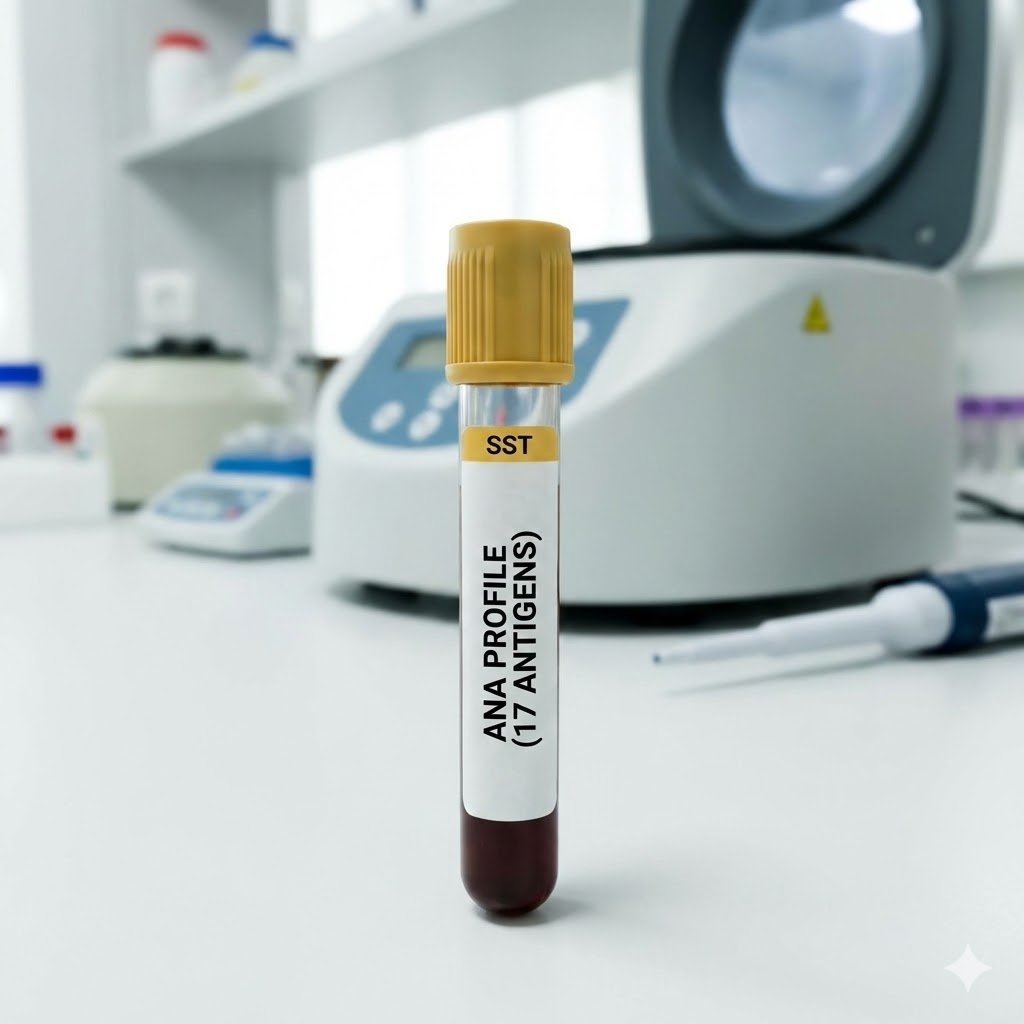
The ANA Profile (17 Antigens) is a comprehensive autoimmune panel that tests for 17 specific autoantibodies at once. It is primarily used to diagnose systemic autoimmune diseases like Lupus (SLE), Sjögren’s Syndrome, and Scleroderma. Unlike a basic ANA screen which only says “Positive” or “Negative,” this test pinpoints exactly which antibody is attacking the body.
Overview: Antinuclear Antibodies (ANA) are antibodies that mistakenly attack the nucleus of the body’s own cells. While a standard ANA test (IFA) detects if any of these antibodies are present, it doesn’t always tell you which specific type they are. The Immunoblot (Blot) technique is a sophisticated method that separates and identifies antibodies against 17 distinct antigens simultaneously. This allows for a precise “molecular diagnosis” of the specific autoimmune condition.
Clinical Significance: This panel detects antibodies associated with specific diseases, including:
-
dsDNA & Sm: Highly specific for Systemic Lupus Erythematosus (SLE).
-
Ro (SSA) & La (SSB): Associated with Sjögren’s Syndrome and Lupus.
-
Scl-70 & Centromere B: Markers for Systemic Sclerosis (Scleroderma).
-
Jo-1: Linked to Polymyositis and Dermatomyositis (muscle inflammation).
-
RNP: Associated with Mixed Connective Tissue Disease (MCTD).
-
AMA-M2: Associated with Primary Biliary Cholangitis.
When is this test recommended?
-
Confirmation: When a patient has a positive ANA screening result (IFA) and the doctor needs to know the specific cause.
-
Symptom Investigation: For patients with complex symptoms like unexplained joint pain, butterfly rash, severe fatigue, dry eyes/mouth, or skin hardening.
-
Differentiation: To distinguish between different autoimmune rheumatic diseases that have overlapping symptoms.
Sample Requirements:
-
Specimen: Serum (Blood).
-
Container: Gold Top (SST) or Red Top Tube.
-
Preparation: No special preparation or fasting is required.