Description
Test Overview
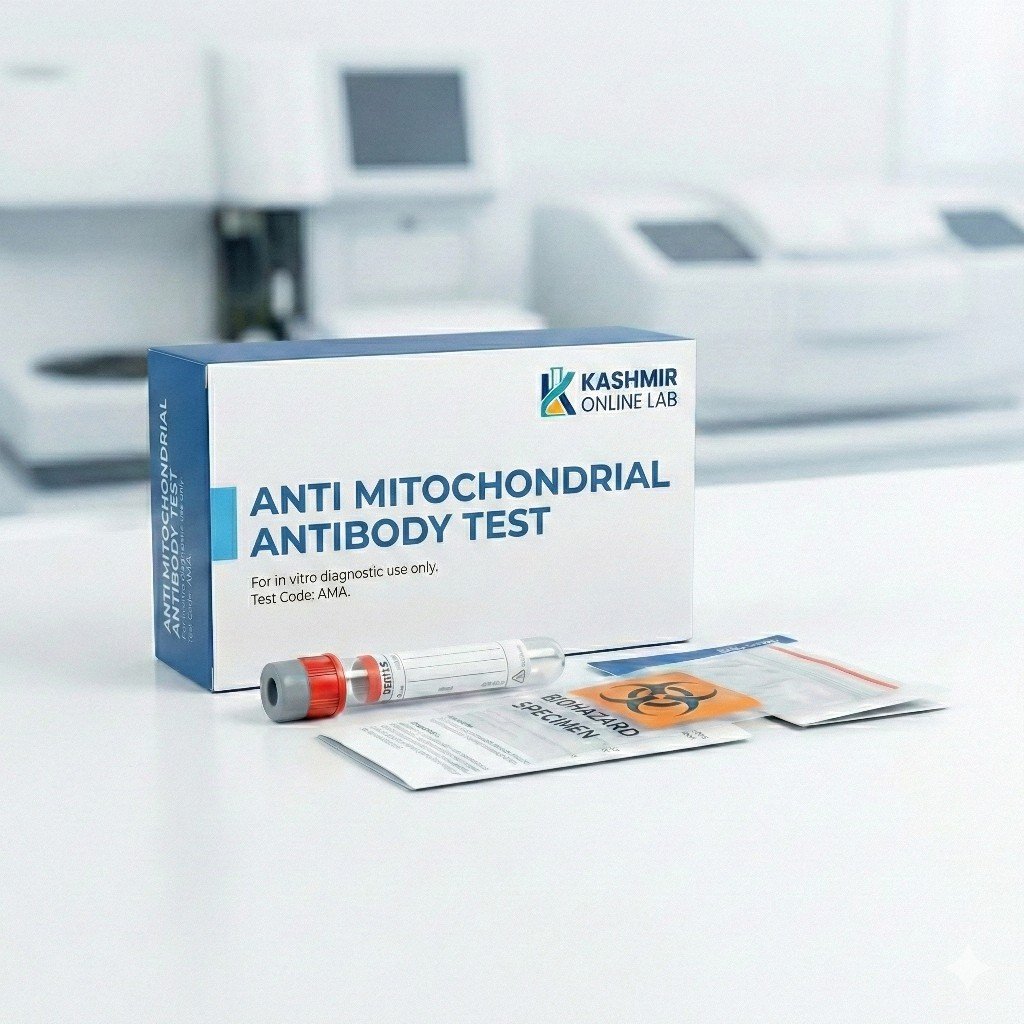
The Anti Mitochondrial Antibody (AMA) test detects the presence of certain autoantibodies in the blood. These antibodies attack mitochondria, the energy-producing “powerhouses” within your body’s cells.
The presence of high levels of AMAs is strongly associated with Primary Biliary Cholangitis (PBC), formerly known as primary biliary cirrhosis. PBC is an autoimmune disease that causes slow, progressive damage to the bile ducts in the liver.
Why is this test performed?
Your doctor will typically order an AMA test if they suspect an autoimmune liver disorder, specifically Primary Biliary Cholangitis (PBC). It is often ordered alongside other liver enzyme tests (like Alkaline Phosphatase – ALP) if you are experiencing symptoms such as:
- Persistent fatigue
- Severe skin itching (pruritus)
- Jaundice (yellowing of the eyes or skin)
- Abdominal pain or discomfort
- Enlarged liver (hepatomegaly)
What do the results mean?
- Positive (Reactive): A significant amount of AMA in the blood strongly suggests a diagnosis of Primary Biliary Cholangitis (PBC). More than 90% of people with PBC test positive for AMA.
- Negative (Non-reactive): Indicates that AMA antibodies were not detected. While this makes PBC less likely, a small percentage of people with the condition may still test negative. Your doctor will consider these results alongside other liver tests and clinical symptoms.
Patient Preparation
No special preparation, such as fasting, is typically required for this test.
Specimen Requirements
- Sample Type: Blood (Serum)
- Collection Method: Venipuncture (arm vein)
Turnaround Time
- Results Available: Typically within 2–4 business days.