Clinical Haematology focuses on the health of your blood and blood-forming tissues. This department handles critical tests for Anemia (CBC), Infection, Clotting Disorders, and Blood Grouping. It is the first line of defense in diagnosing fevers, fatigue, and bleeding issues.
Overview:
Haematology is the branch of medicine concerned with the study of blood, the blood-forming organs, and blood diseases. By examining the cellular components of blood—Red Blood Cells (RBCs), White Blood Cells (WBCs), and Platelets—we can detect a wide range of disorders, from simple vitamin deficiencies to complex genetic conditions or leukemias.
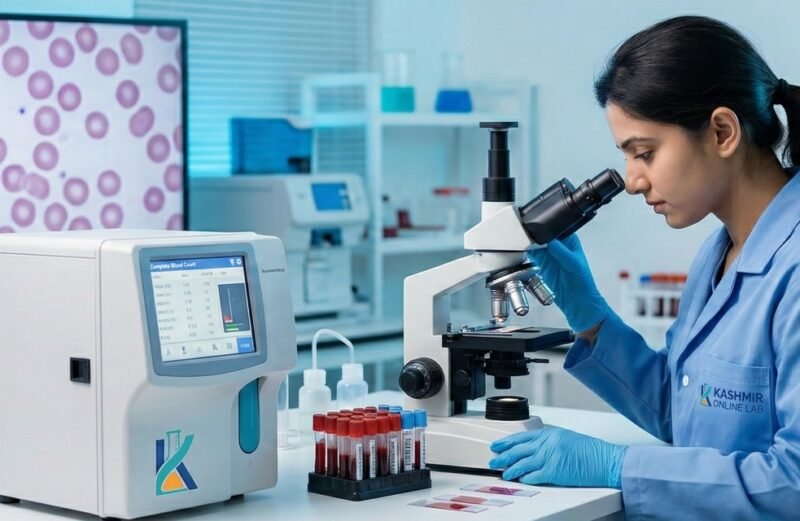
Our Haematology department combines advanced automated cell counters with expert manual microscopic review by pathologists to ensure that no abnormality is missed.
What does this category cover?
-
Routine Blood Health:
-
Complete Blood Count (CBC): The most common blood test. It evaluates overall health and detects anemia, infection, and leukemia.
-
ESR (Erythrocyte Sedimentation Rate): A marker for inflammation in the body.
-
-
Anemia & Red Cell Studies:
-
Hemoglobin Analysis: Checks oxygen-carrying capacity.
-
Peripheral Blood Smear: A microscopic exam to look at the shape and size of blood cells (vital for diagnosing Malaria or specific anemias).
-
Reticulocyte Count: Measures how fast the body is making new red blood cells.
-
-
Coagulation (Clotting) Profile:
-
PT/INR (Prothrombin Time): Measures how long it takes blood to clot; essential for patients on blood thinners (like Warfarin).
-
APTT: Evaluates the intrinsic clotting pathway.
-
-
Blood Typing:
-
Blood Group (ABO & Rh): Essential for surgeries, pregnancy, and blood transfusions.
-
-
HbA1c: (Often processed here or in Biochemistry) Measures 3-month average blood sugar via hemoglobin.
Why choose our Haematology services?
-
Dual-Check System: We use 5-part automated cell counters for precision, but every abnormal result is cross-checked manually under a microscope by a specialist.
-
Critical Care Support: Rapid turnaround for Dengue (Platelet counts) and Malaria detection.
-
Comprehensive: From routine screening to advanced coagulation studies.
General Patient Instructions
(These apply to most tests in this category)
-
Fasting: Generally not required for a CBC or Blood Grouping. However, if the test is combined with biochemistry (like Sugar or Lipid), fasting may be needed.
-
Sample Type: Whole Blood (EDTA tube – Lavender top) and Citrate tube (Blue top for clotting tests).
-
Medications: Inform the lab if you are on blood thinners (aspirin, warfarin, heparin) as this directly affects coagulation results.