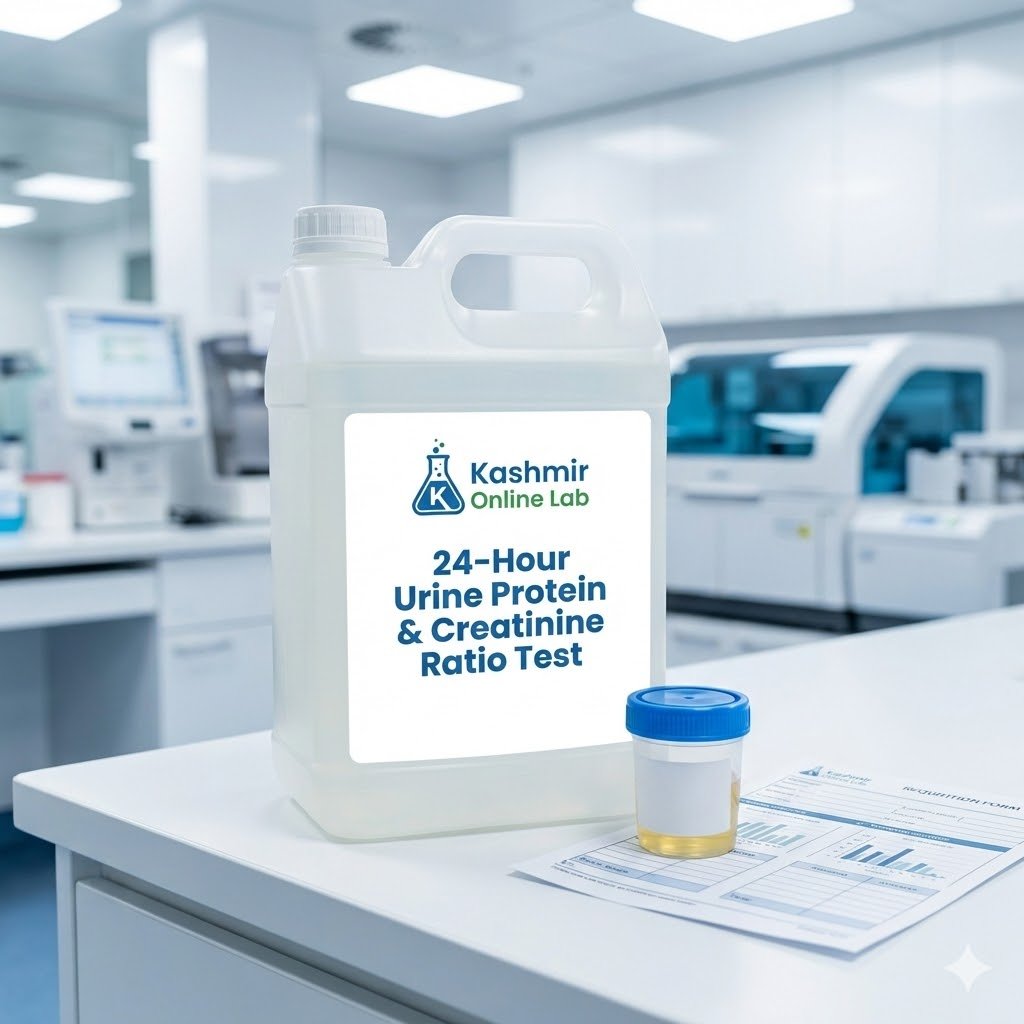
Description
Overview: While a simple “spot” urine test can give a quick snapshot, a 24-Hour Urine Collection provides the most accurate picture of kidney health. By collecting every drop of urine produced in a day, doctors can calculate exactly how much protein is being lost and how effectively the kidneys are clearing creatinine from the blood.
Clinical Significance:
-
Kidney Disease Monitoring: It is essential for tracking the progression of Chronic Kidney Disease (CKD), Diabetic Nephropathy, and Glomerulonephritis.
-
Preeclampsia in Pregnancy: This test is frequently ordered for pregnant women with high blood pressure to rule out Preeclampsia (significant protein loss indicating organ stress).
-
Lupus (SLE): Monitors kidney involvement in autoimmune diseases.
-
Nephrotic Syndrome: Diagnoses conditions where the kidneys leak large amounts of protein.
When is this test recommended?
-
If a routine dipstick test shows “trace” or “positive” protein.
-
For diabetic or hypertensive patients to monitor kidney stress.
-
During pregnancy, if high blood pressure or swelling (edema) develops.
Sample Requirements:
-
Specimen: 24-Hour Urine Collection.
-
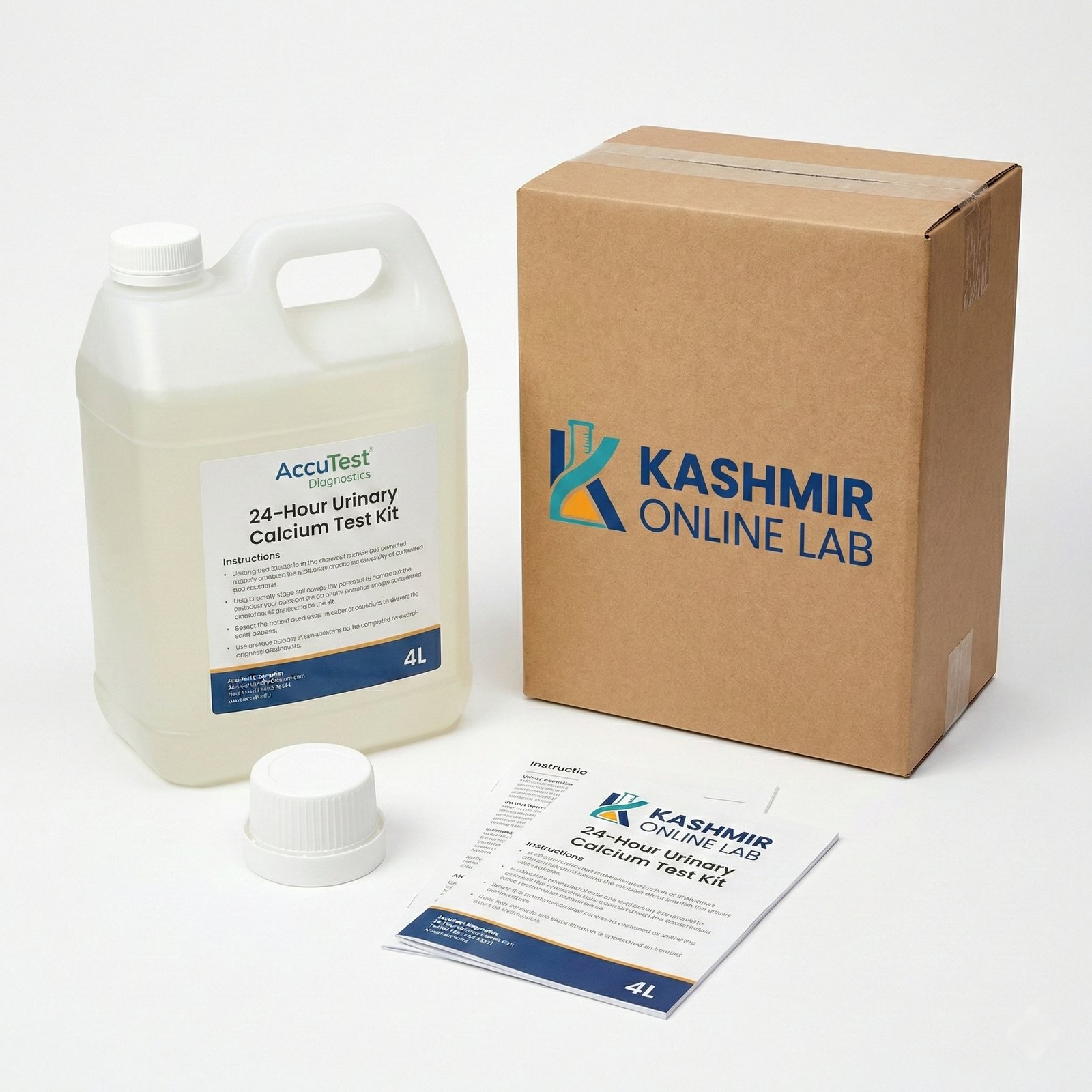
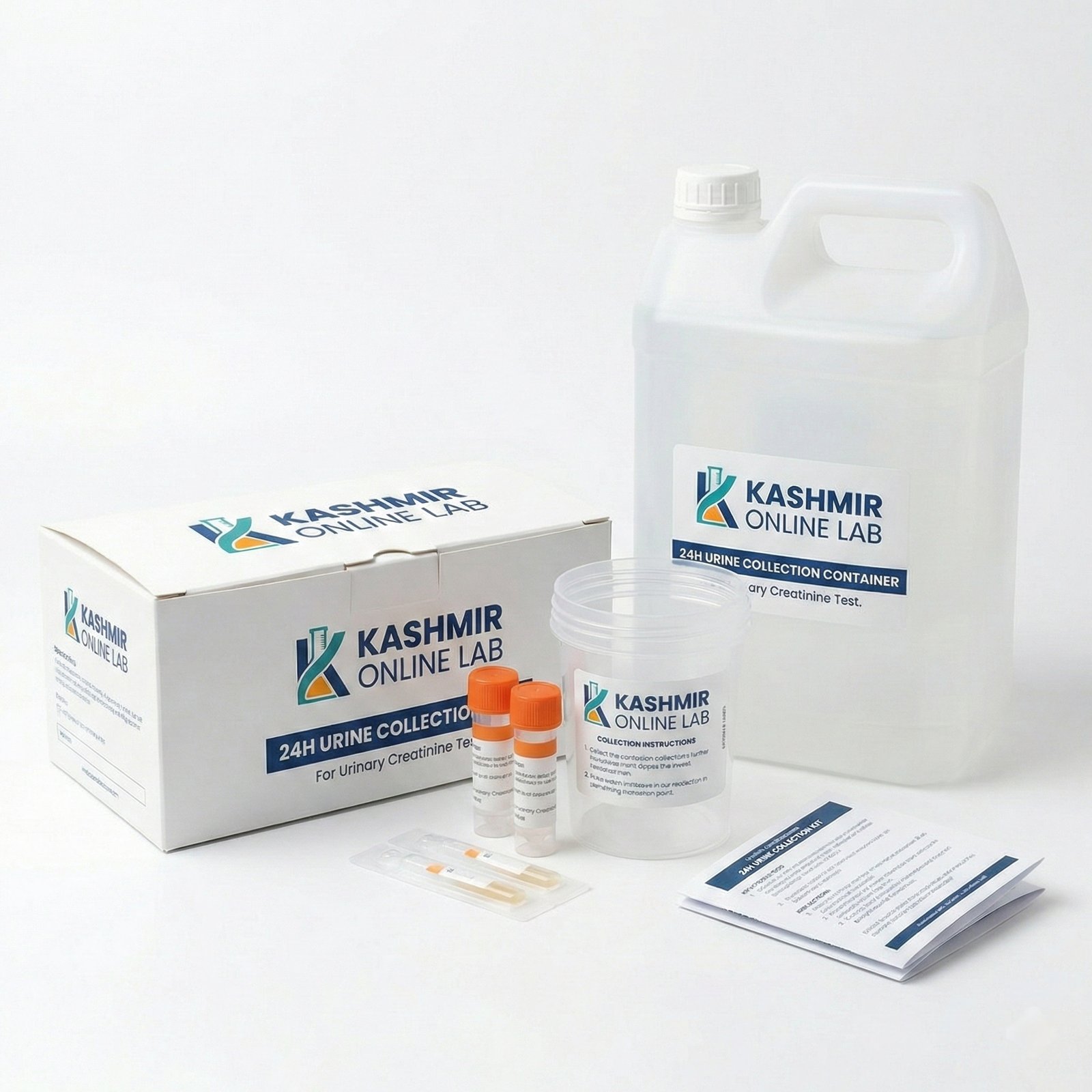
Container: Large 3-4 Liter Plastic Container (Provided by the Lab).
-
Process:
-
Start: Empty bladder into the toilet (discard first urine) at, say, 8:00 AM. Note the time.
-
Collect: Collect all urine for the next 24 hours in the container.
-
Finish: Collect the final urine at exactly 8:00 AM the next day.
-
-
Preparation: Keep the container in a cool place during collection. No specific fasting required.