
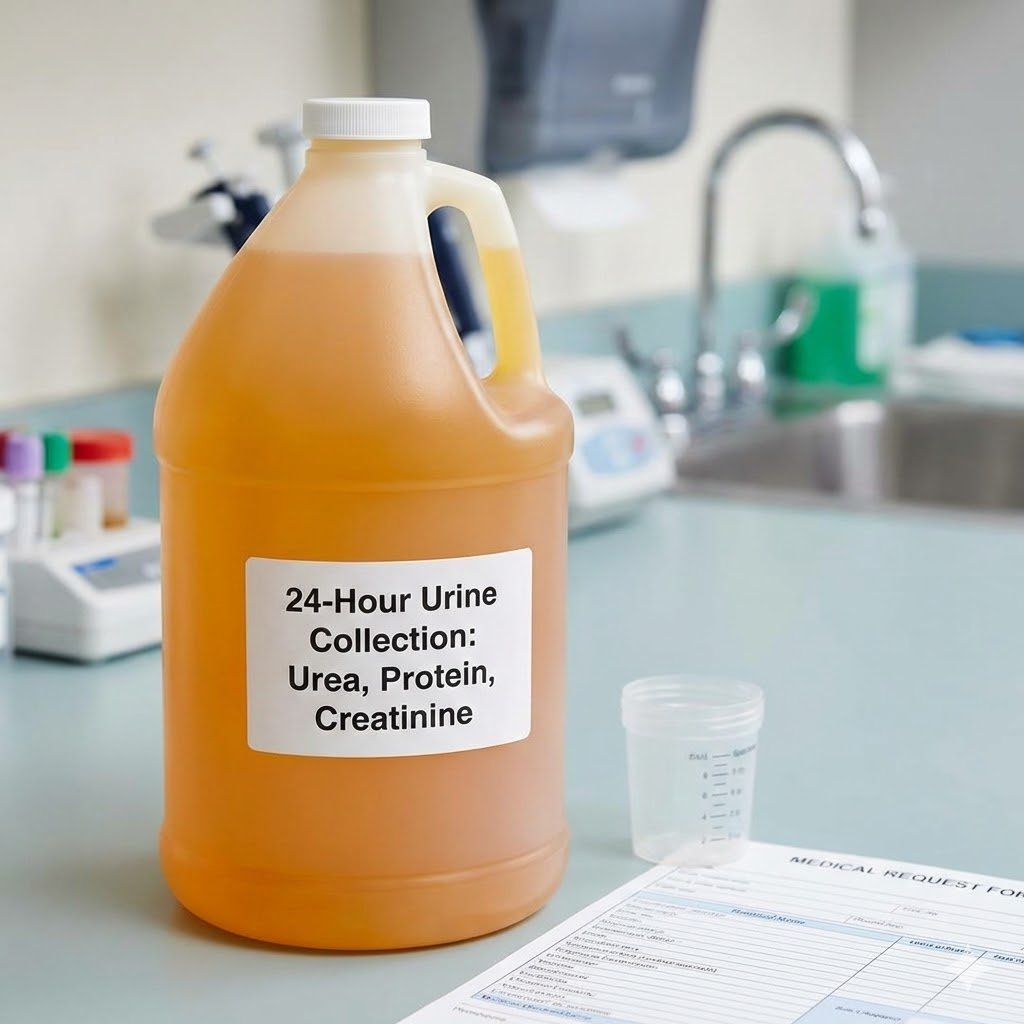
Description
This 24-Hour Urine Test is a comprehensive assessment of kidney function. By collecting all urine produced in a day, it accurately measures how well the kidneys are filtering waste (urea and creatinine) and if they are leaking protein, which is a key sign of kidney damage
Overview: A single urine sample can vary in concentration throughout the day. A 24-hour collection provides a more accurate, average measure of daily kidney function. This panel measures three key substances:
-
Creatinine: A waste product from muscle metabolism. The amount in urine helps calculate the Creatinine Clearance, the best measure of kidney filtration rate (GFR)
-
Urea: A waste product from protein breakdown. Its levels help assess protein intake and overall kidney excretion.
-
Protein: Healthy kidneys filter protein back into the blood. Finding significant amounts of protein in the urine (proteinuria) is a primary sign of kidney disease or damage from conditions like diabetes or high blood pressure.
Clinical Significance:
-
Kidney Disease Diagnosis: It is used to diagnose and monitor chronic kidney disease (CKD) and glomerulonephritis.
-
Monitoring Conditions: Essential for patients with diabetes and hypertension to check for early kidney damage (diabetic nephropathy, hypertensive nephrosclerosis).
-
Kidney Stones: Used to investigate the cause of recurring kidney stones.
-
Nutritional Status: Urea levels can provide information about a patient’s protein balance.
When is this test recommended?
-
When blood tests show abnormal kidney function (e.g., high serum creatinine).
-
For patients with foamy urine (a sign of protein).
-
To monitor the progression of diagnosed kidney disease or the effectiveness of treatment.
Sample Requirements:
-
Specimen: 24-Hour Urine.
-
Container: A large (usually 3-4 liter), clean, and often dark-colored collection jug provided by the lab.
-
Preparation:
-
The collection must start and end at the same time of day (e.g., discard the first morning void, then collect all urine for the next 24 hours, including the final morning void on day two).
-
The collection jug should typically be kept cool (refrigerated or on ice) during the 24-hour period.
-
Accurate timing and collecting all urine are critical for valid results.
-