Description
Overview
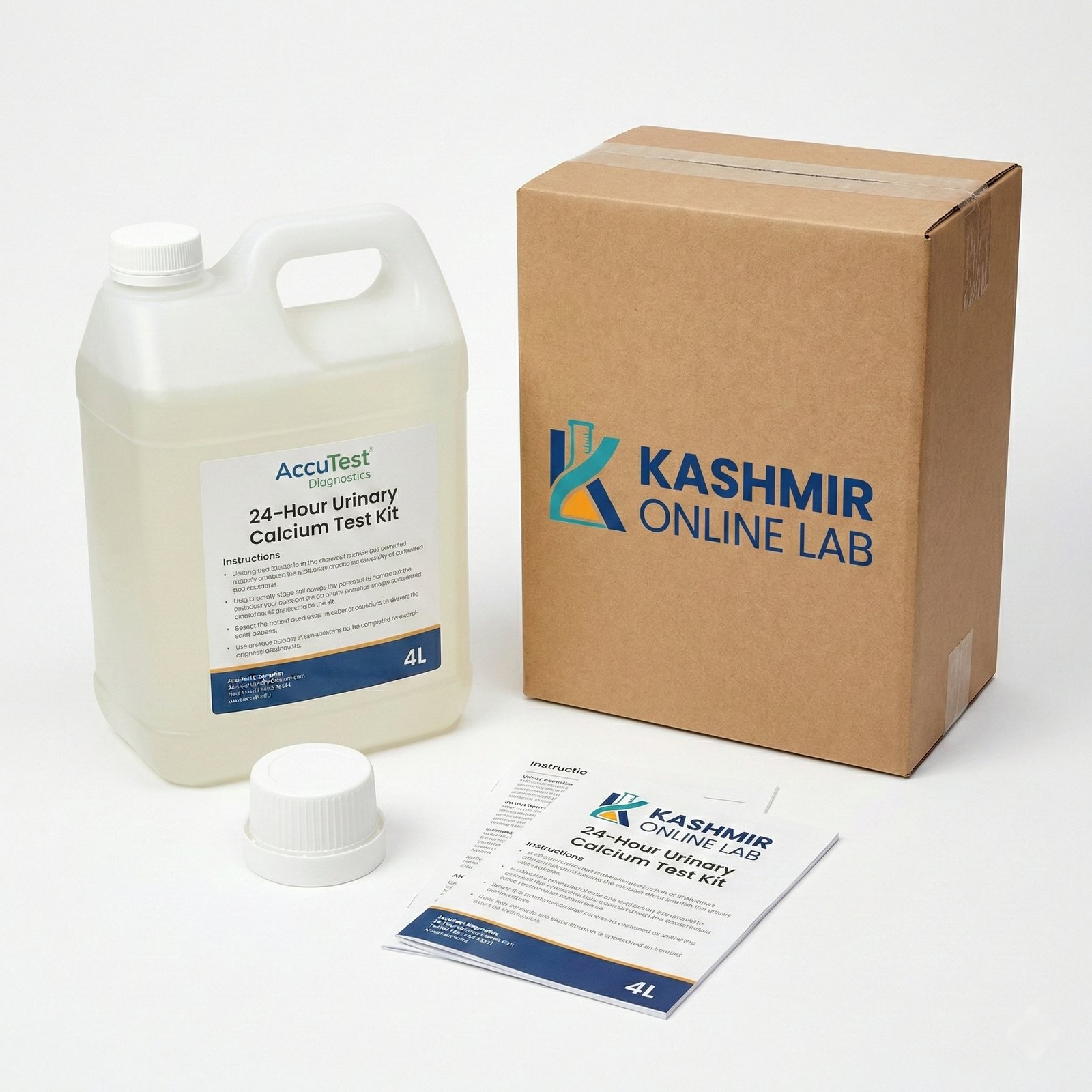
The 24-Hour Urinary Calcium Test is a diagnostic assessment that measures the total amount of calcium excreted by the kidneys into the urine over a full 24-hour period. This test is crucial for diagnosing and monitoring conditions related to calcium metabolism, such as kidney stones, bone diseases like osteoporosis, and disorders of the parathyroid gland.
Purpose & Clinical Significance
This test is performed for several key medical reasons:
- Evaluating Kidney Stones: High levels of urine calcium (hypercalciuria) are a primary risk factor for developing calcium-based kidney stones.
- Assessing Bone Health: It helps determine if bone loss (osteoporosis) is caused by excessive calcium loss through urine.
- Diagnosing Parathyroid Disorders: It aids in distinguishing between primary hyperparathyroidism (high blood and urine calcium) and Familial Hypocalciuric Hypercalcemia (FHH), a genetic condition where urine calcium is typically low despite high blood calcium.
- Monitoring Malabsorption: It can help assess conditions where the body isn’t absorbing calcium properly, leading to low urine calcium.
Procedure: How to Collect
A successful test relies entirely on a strict 24-hour collection protocol without missing any samples.
- Start Time (Day 1): Begin at a specific time (e.g., 8:00 AM). Urinate into the toilet and flush this first void. Do not save it. Record this time as the “Start Time” on the jug label.
- Collection Period: For the next 24 hours, collect all urine passed into the provided container.
- Storage: Keep the container cool (refrigerated or on ice) throughout the collection period to prevent bacterial growth.
- Finish Time (Day 2): At the exact same time as the Start Time (e.g., 8:00 AM the next day), urinate one last time and add this final void to the container. This completes the test.
Reference Ranges
Normal values vary depending on the patient’s diet (calcium intake) and the specific laboratory. Typical reference ranges for a 24-hour period are:
- Adults on a regular diet: 100 – 300 mg/24 hours.
- Adults on a low-calcium diet: 50 – 150 mg/24 hours.
- Note: Ranges vary between laboratories; always consult the specific lab’s reference guide.
Interpreting Results
- High Levels (Hypercalciuria): May indicate kidney stones, hyperparathyroidism, excess vitamin D intake, osteoporosis, or certain cancers affecting bone.
- Low Levels (Hypocalciuria): May indicate malabsorption disorders (like celiac or Crohn’s), vitamin D deficiency, hypoparathyroidism, or Familial Hypocalciuric Hypercalcemia (FHH).
Factors Affecting Results
- Diet: High intake of sodium, protein, or calcium can increase levels; low intake can decrease them.
- Medications: Diuretics (water pills), antacids, and lithium can affect results.
- Improper Collection: Missing just one urine sample during the 24-hour period will lead to inaccurate results.