Description
Overview: Metanephrines (metanephrine and normetanephrine) are the inactive metabolites (breakdown products) of catecholamines like epinephrine (adrenaline) and norepinephrine. While adrenaline stays in the blood for only a few minutes, these metabolites collect in the urine over 24 hours, providing a reliable record of hormone production. This test is used to detect tumors that secrete excess “fight or flight” hormones.
Clinical Significance:
-
Pheochromocytoma: This is a rare tumor of the adrenal gland tissue. It releases bursts of adrenaline, causing dangerous spikes in blood pressure.
-
Paraganglioma: A similar tumor found outside the adrenal glands.
-
Symptoms Investigated: The test is ordered for patients with “spells” of high blood pressure accompanied by the “Classic Triad” of symptoms: headaches, sweating, and rapid heart rate (palpitations).
-
Genetic Screening: It is also used to screen family members with genetic conditions like Multiple Endocrine Neoplasia (MEN 2).
When is this test recommended?
-
If you have hypertension that does not respond to standard medication.
-
If you experience episodic anxiety, sweating, and pounding heartbeats.
-
If an adrenal nodule is accidentally discovered on a CT or MRI scan.
Sample Requirements:
-
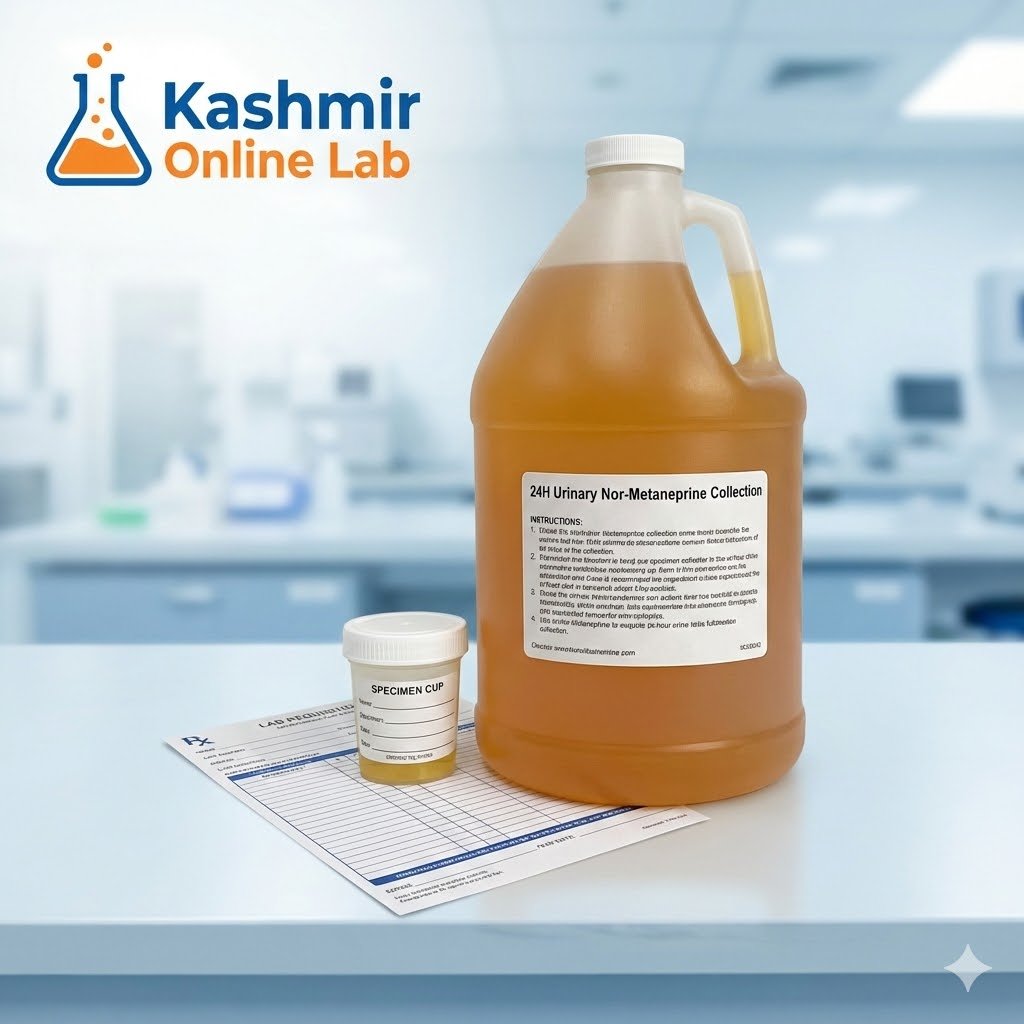
Specimen: 24-Hour Urine Collection.
-
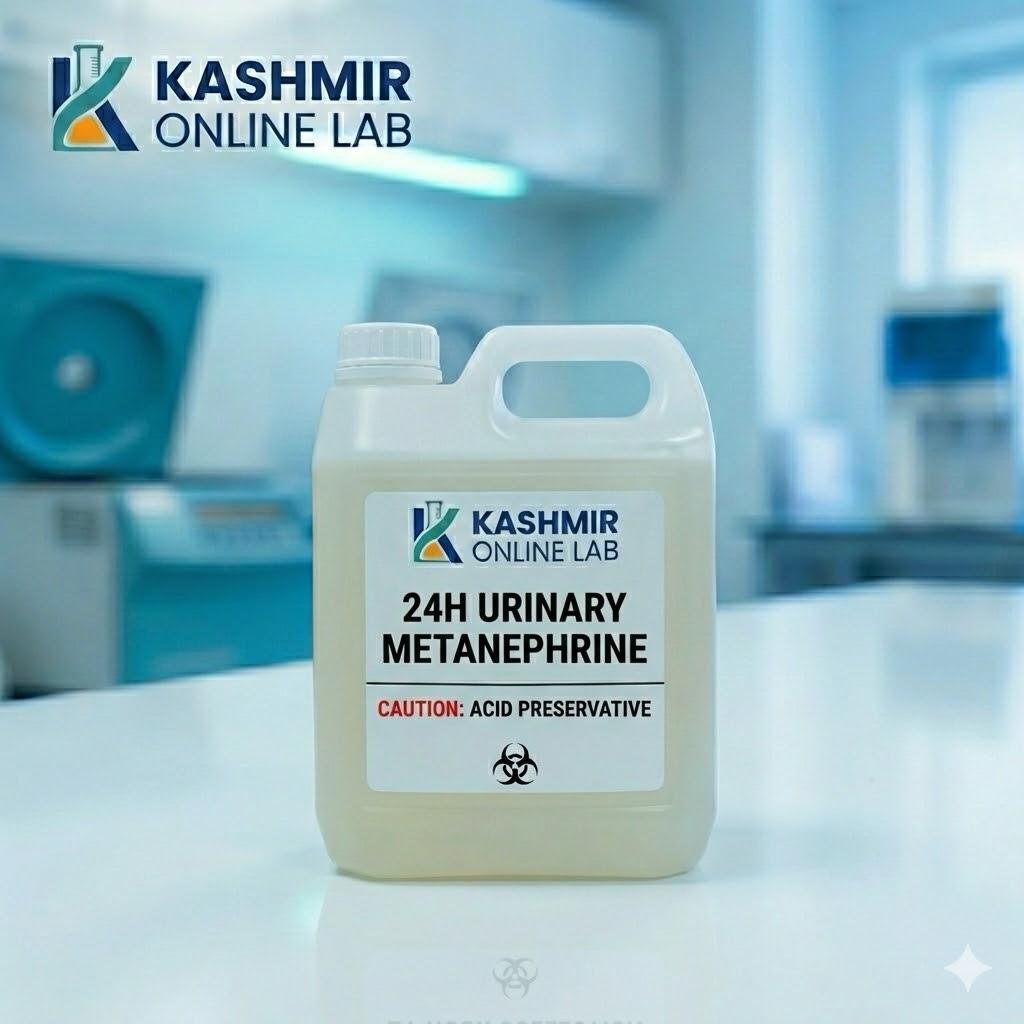
Container: Large 24-Hour Urine Container (usually containing a liquid acid preservative like HCl).
-
Crucial Preparation (Diet & Meds):
-
Preservative: This test often requires an acid preservative in the container to stop the hormones from breaking down. Be careful not to spill the acid.
-
Dietary Restrictions: For 2-3 days before and during collection, you may need to avoid caffeine, bananas, chocolate, vanilla, and citrus fruits, as these can artificially raise levels.
-
Medications: Inform your doctor about any blood pressure meds, decongestants, or antidepressants you are taking.
-