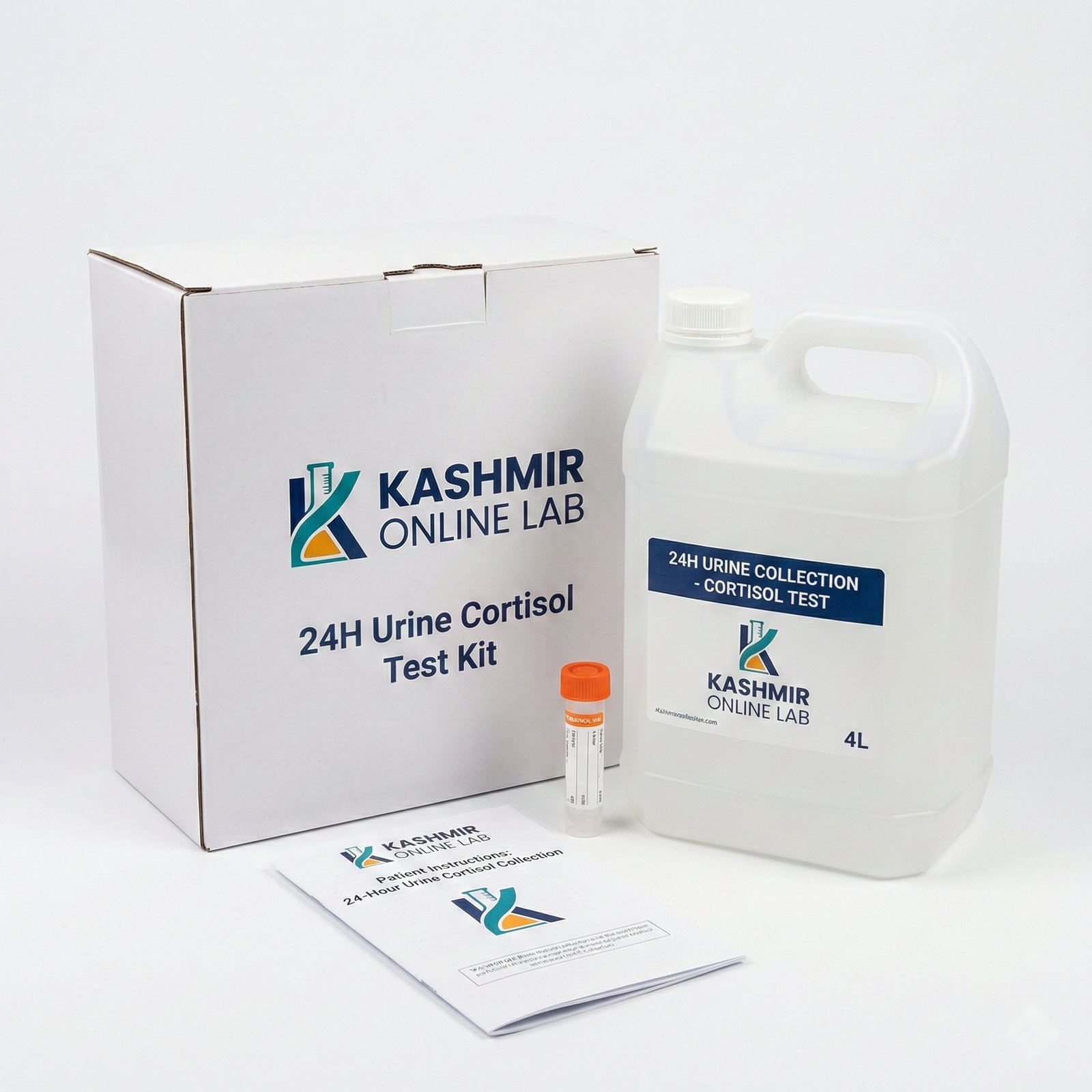
Description
The 24-Hour Urine Cortisol Test (also known as Urinary Free Cortisol or UFC) is a diagnostic test that measures the amount of cortisol—a steroid hormone produced by the adrenal glands—excreted in the urine over a full 24-hour period. Unlike blood cortisol levels, which fluctuate significantly throughout the day, a 24-hour urine sample provides a better overall picture of total daily cortisol production.
Purpose & Clinical Significance
This test is considered the “gold standard” screening tool for:
- Diagnosing Cushing’s Syndrome: It detects excessive cortisol production caused by adrenal tumors, pituitary tumors, or long-term steroid use.
- Evaluating Adrenal Function: It helps assess how the adrenal glands are responding to stress or disease.
- Ruling out “Pseudo-Cushing’s”: It helps differentiate true disease from elevated cortisol caused by severe depression, anxiety, or alcoholism.
Procedure
The accuracy of this test depends on a complete collection.
- Preparation: Patients should generally avoid strenuous exercise and excessive stress the day before and during the test.
- Day 1 (Start): Urinate into the toilet upon waking (e.g., 8:00 AM) and flush it. Do not collect this. Record the time as the start.
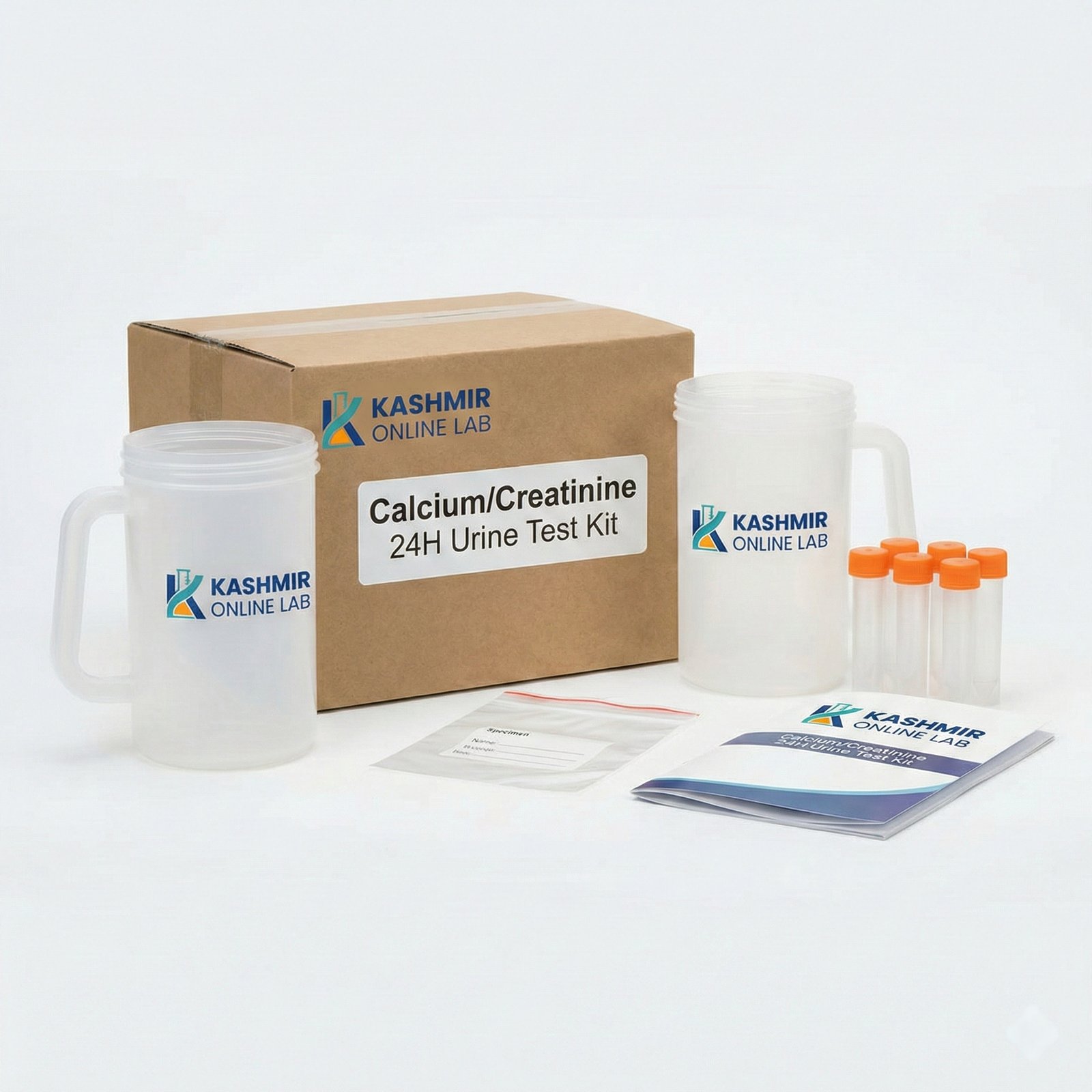
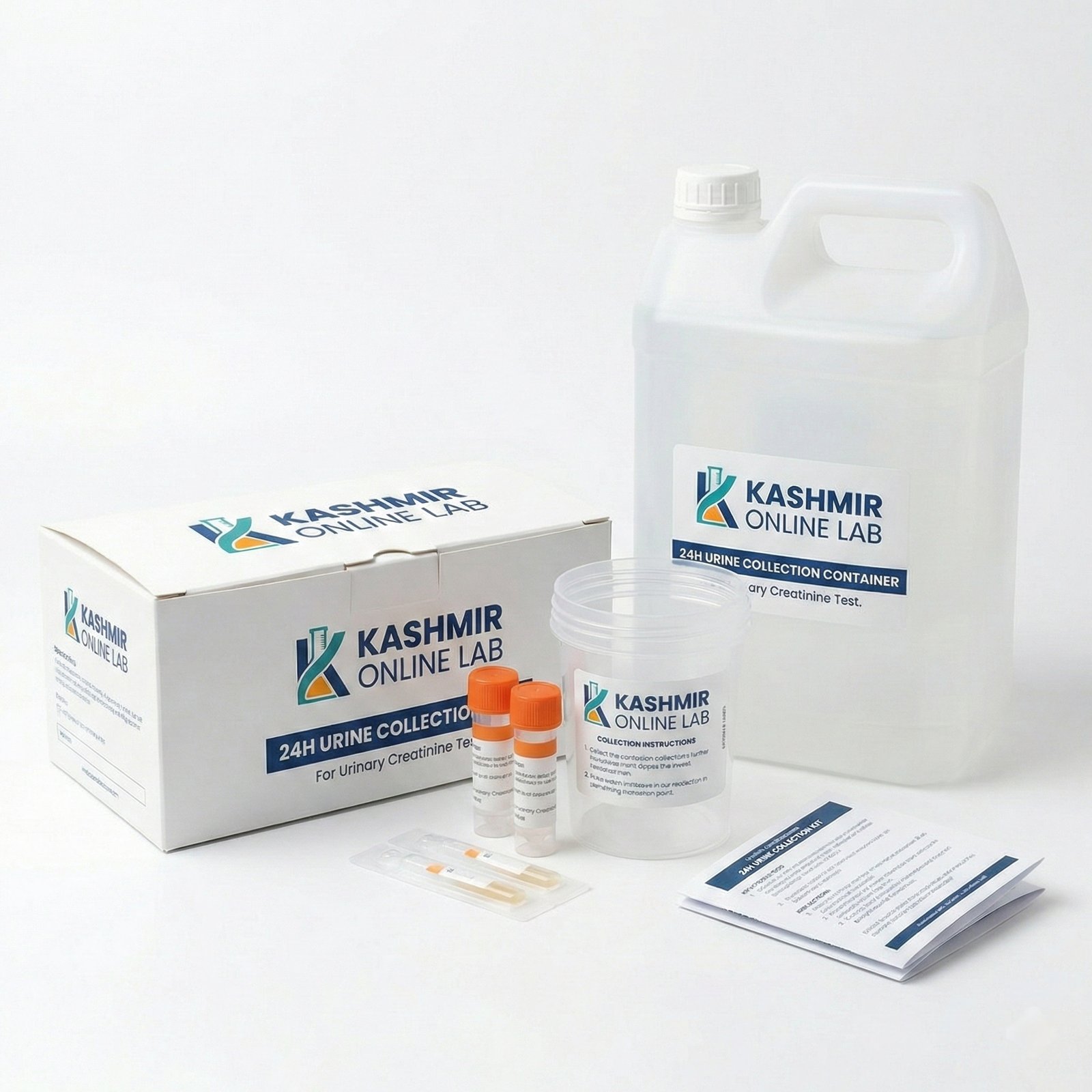
- Collection: Collect all urine passed for the next 24 hours into the provided container.
- Storage: The container must be kept cool (refrigerated or on ice) to prevent cortisol degradation.
- Day 2 (Finish): At the exact same time the next morning (e.g., 8:00 AM), collect the final urine sample and add it to the container.
Reference Ranges
- Adults: Typically < 45–60 micrograms/24 hours (mcg/24h) or < 124–165 nmol/day.
- Note: Ranges vary significantly by laboratory and assay method.
Interpreting Results
- High Levels: Strongly suggestive of Cushing’s syndrome. Results are often 3–4 times the upper limit of normal in disease states.
- Low Levels: May indicate Adrenal Insufficiency (Addison’s Disease) or hypopituitarism.