Description
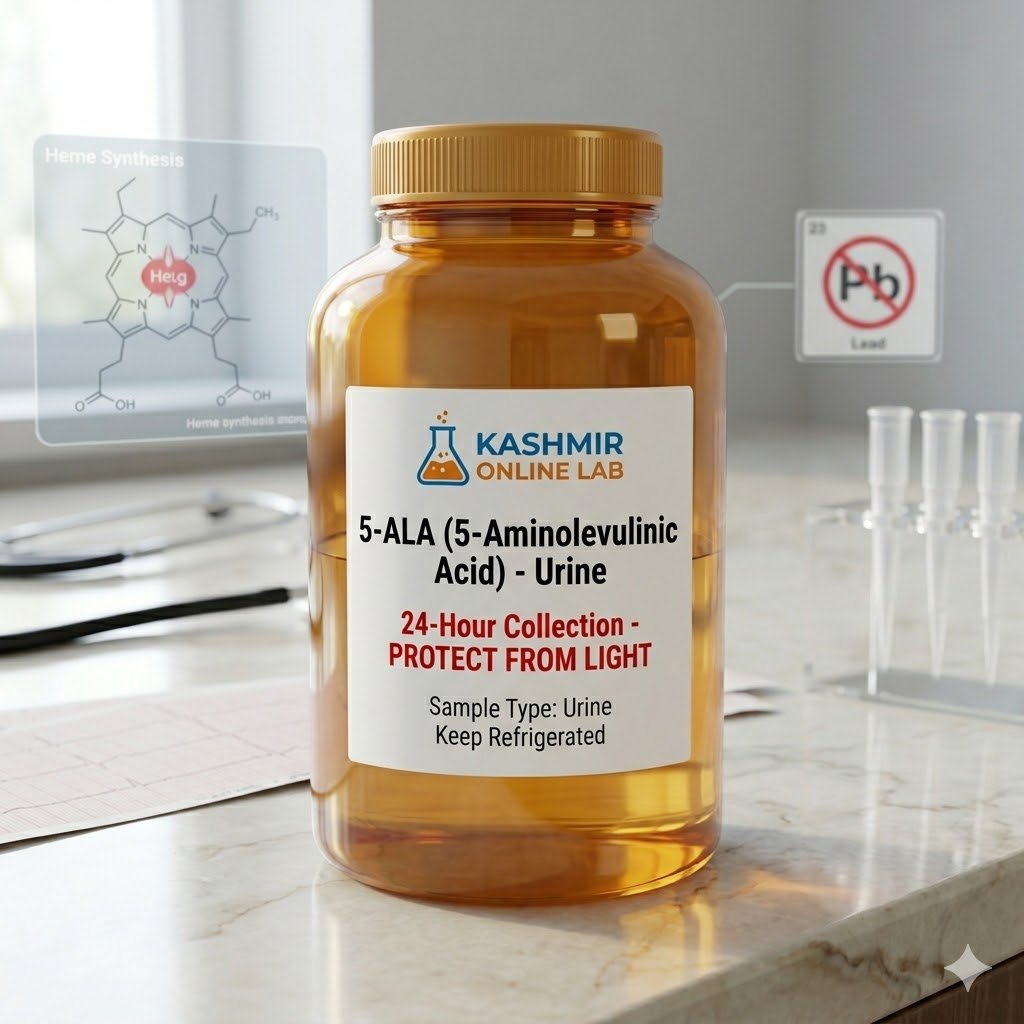
The 5-ALA (5-Aminolevulinic Acid) Urine Test is a highly specialized metabolic screen. It is primarily used as a critical marker to diagnose and monitor Acute Porphyrias (rare genetic disorders) and is also a vital biomarker for identifying and evaluating Lead Poisoning, as elevated lead levels block the body’s ability to process 5-ALA.
Overview: This test measures the exact quantity of 5-Aminolevulinic Acid (5-ALA) in the urine, typically collected over a full 24-hour period. 5-ALA is a vital building block used by the body to synthesize porphyrins and, ultimately, heme—the essential component of hemoglobin that carries oxygen in the blood. If this synthesis pathway is disrupted by a genetic enzyme deficiency or an external toxin, 5-ALA cannot be converted and instead accumulates and spills into the urine.
Clinical Significance:
-
Diagnosing Acute Porphyrias: Elevated 5-ALA levels, along with porphobilinogen (PBG), are the hallmark findings during acute, life-threatening attacks of certain hepatic porphyrias (like Acute Intermittent Porphyria, Hereditary Coproporphyria, and Variegate Porphyria). Attacks can cause severe abdominal pain and neurological issues.
-
Detecting Lead Poisoning: 5-ALA is widely recognized as a robust biomarker for lead exposure. Lead directly inhibits an enzyme (ALAD) needed to process 5-ALA. Even medium levels of lead exposure can cause a significant spillage of 5-ALA into the urine, which persists long after initial exposure.
-
Differential Diagnosis: Because Lead Poisoning can cause symptoms similar to an acute Porphyria attack (abdominal pain, anemia), measuring 5-ALA and PBG help doctors differentiate between these two distinct conditions.
When is this test recommended?
-
During Acute Attacks: When a patient experiences sudden, severe, and poorly localized abdominal pain, muscle weakness, or unexplained neurological symptoms.
-
Suspected Toxin Exposure: For individuals with occupational or environmental exposure to lead, especially if they have non-specific symptoms like fatigue, abdominal pain, or anemia.
-
Family History: Screening for individuals with a known family history of a specific genetic porphyria condition.
Sample Requirements:
-
Specimen: 24-Hour Urine Collection (Preferred for accurate quantitation). A random urine aliquot can be collected as an alternative, but results must be corrected for creatinine.
-
Container: Large, heavy-duty 24-hour urine collection container, ideally amber-colored (preferred) or standard white, but it must be wrapped in aluminum foil to ensure total PROTECT FROM LIGHT. A random sample also needs a light-protected cup.
-
Preparation: Keep refrigerated or on ice at all times throughout the 24-hour period. No fasting is required. Total light protection is critical.