Description
Overview: The Activated Partial Thromboplastin Time (APTT) test evaluates the functionality of the intrinsic and common pathways of the coagulation cascade. This is a series of reactions in your body that leads to the formation of a blood clot. The test measures the number of seconds it takes for a clot to form in a blood sample after specific reagents are added.
Clinical Significance:
-
Bleeding Disorders: A prolonged (longer than normal) APTT can indicate a deficiency in certain clotting factors (such as Factor VIII in hemophilia A or Factor IX in hemophilia B) or the presence of an inhibitor.
-
Clotting Disorders: It is used to investigate the cause of unexplained blood clots (thrombosis).
-
Medication Monitoring: The test is essential for monitoring patients on unfractionated heparin therapy to ensure their dosage is safe and effective. It is generally not used to monitor low-molecular-weight heparin or warfarin (which is monitored with the PT/INR test).
-
Pre-surgical Screening: It may be ordered before surgery to assess the risk of excessive bleeding.
When is this test recommended?
-
To investigate unexplained or prolonged bleeding, such as frequent nosebleeds, heavy menstrual periods, or easy bruising.
-
To monitor heparin therapy.
-
As part of a pre-surgical evaluation.
-
To screen for antiphospholipid syndrome, an autoimmune disorder that can cause inappropriate blood clots.
Sample Requirements:
-
Specimen: Plasma.
-
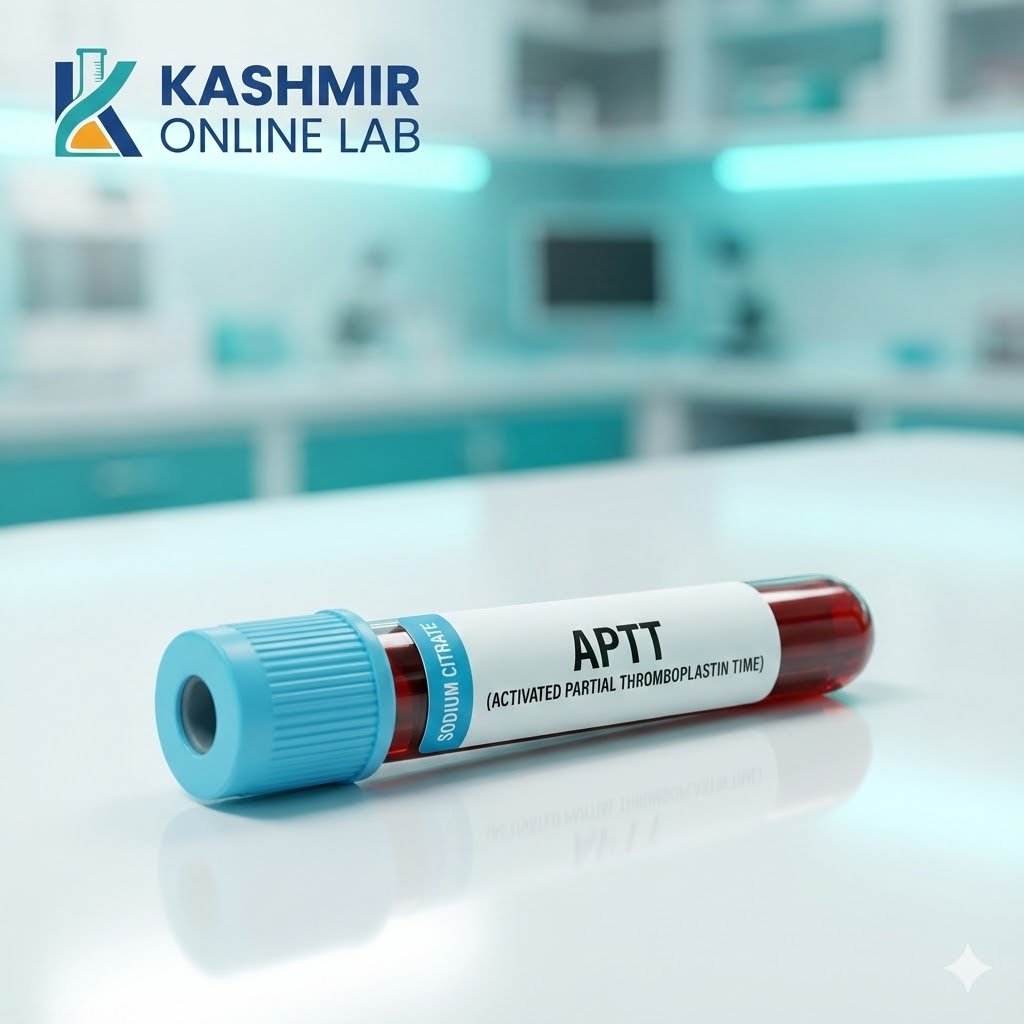
Container: Light Blue Top Tube (Sodium Citrate).
-
Crucial Handling: The tube must be filled completely to the marked fill line to ensure the correct 9:1 ratio of blood to anticoagulant. An underfilled tube can lead to falsely prolonged results and may be rejected by the lab.
-
Preparation: No fasting is typically required, but you should inform your doctor of any medications you are taking, especially blood thinners.