Description
Overview: Hepatitis E is a viral liver disease transmitted primarily through contaminated drinking water (fecal-oral route). The body produces IgM antibodies as the first line of defense against the virus. A positive Anti-HEV IgM result confirms that the infection is acute (happening right now or very recently).
Clinical Significance:
-
Acute Diagnosis: Differentiates Hepatitis E from other types of viral hepatitis (like A, B, or C) which have similar symptoms.
-
High-Risk Groups: While most people recover on their own, Hepatitis E can be dangerous for:
-
Pregnant Women: Can lead to severe liver failure and fetal loss, especially in the third trimester.
-
Immunocompromised Patients: Those with weak immune systems or chronic liver disease.
-
When is this test recommended?
-
To investigate symptoms of acute hepatitis, such as jaundice (yellowing of skin/eyes), dark urine, pale stools, fatigue, nausea, and abdominal pain.
-
During outbreaks of waterborne illness.
-
For pregnant women presenting with liver dysfunction.
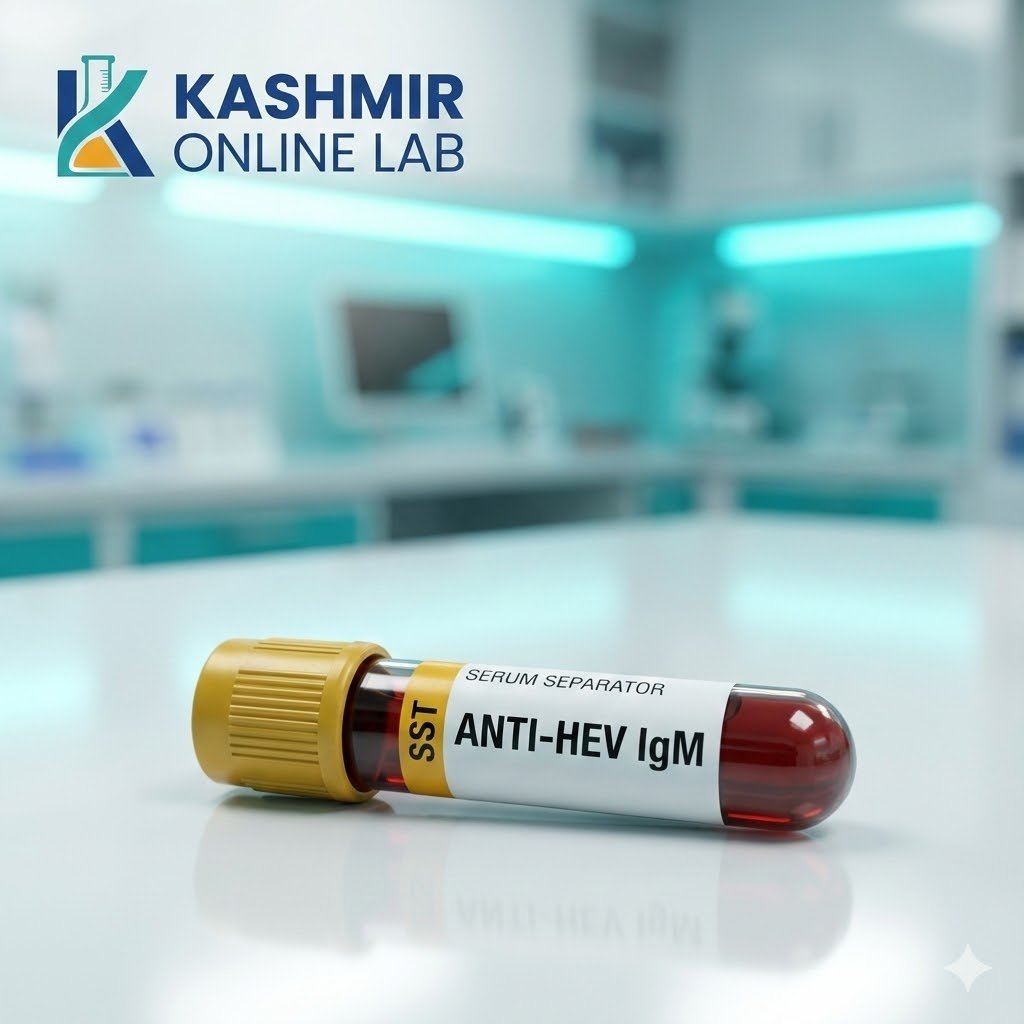
Sample Requirements:
-
Specimen: Serum.
-
Container: Gold Top (SST) or Red Top Tube.
-
Preparation: No fasting is required.