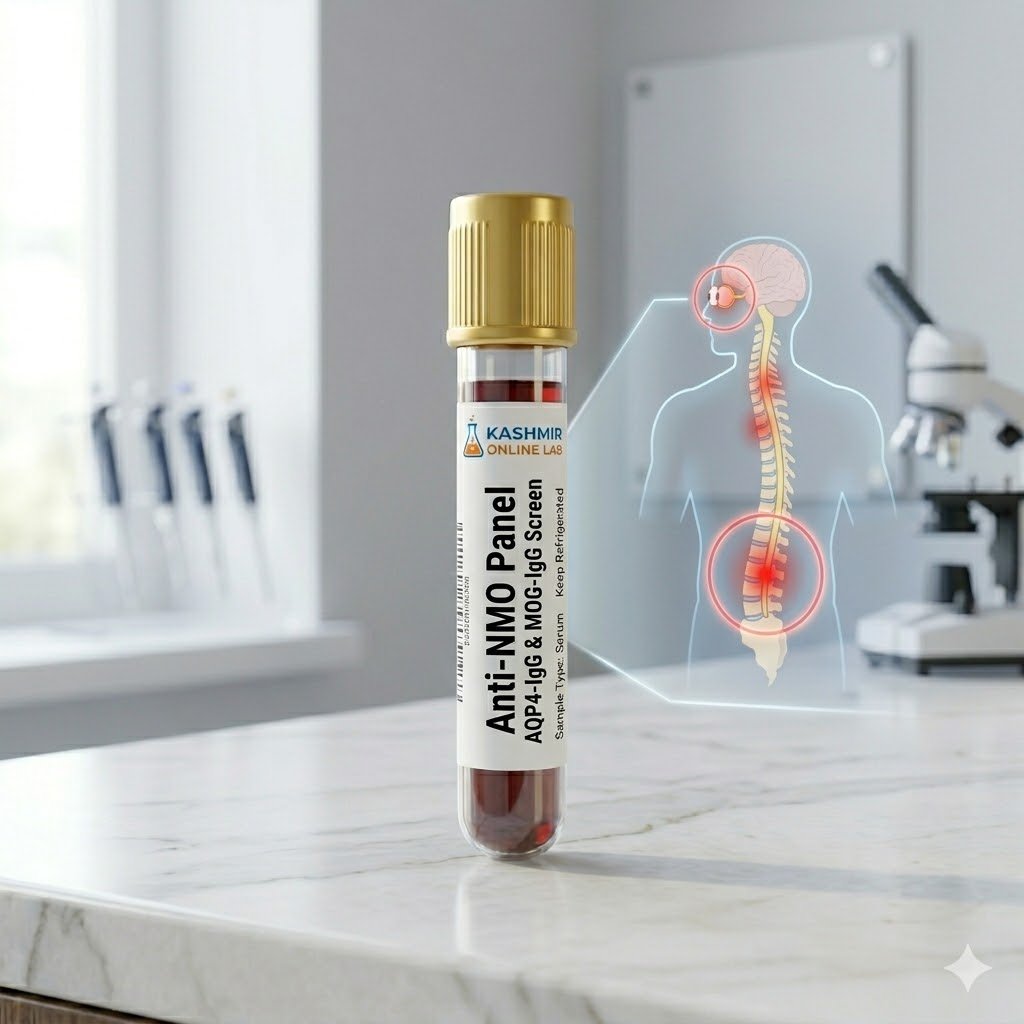
Description
Anti-NMO Panel (Neuromyelitis Optica Spectrum Disorder – NMOSD)
The Anti-NMO Panel is a highly specific autoimmune blood screen used to diagnose Neuromyelitis Optica Spectrum Disorder (NMOSD), a severe inflammatory disease of the central nervous system. This panel differentiates NMO from similar conditions like Multiple Sclerosis by detecting definitive antibodies (AQP4 and MOG).
Neuromyelitis Optica (NMO), also known as Devic’s disease, is a rare but devastating autoimmune condition. The immune system mistakenly attacks healthy cells, predominantly affecting the optic nerves (causing vision loss) and the spinal cord (causing paralysis and sensory issues). NMOSD is often confused with Multiple Sclerosis (MS), but the causes, treatments, and prognosis are different. This test panel is the gold standard for diagnosis.
What is measured (The “Panel”): The comprehensive Anti-NMO Panel primarily checks for two crucial antibodies in the serum:
-
Anti-Aquaporin-4 Antibody (AQP4-IgG): This is the definitive marker for classic NMO, present in ~70-80% of cases. Its presence confirms an NMOSD diagnosis.
-
Anti-Myelin Oligodendrocyte Glycoprotein Antibody (MOG-IgG): This antibody is found in patients who test negative for AQP4 but have similar symptoms, leading to a diagnosis of MOG Antibody-Associated Disease (MOGAD).
Clinical Significance:
-
Definitive Diagnosis: A positive result for either AQP4-IgG or MOG-IgG, combined with clinical symptoms (optic neuritis or transverse myelitis), is essential for diagnosing NMOSD/MOGAD.
-
Differentiation from MS: Critically, some standard MS treatments can worsen NMO attacks, making accurate differentiation via this panel life-saving.
-
Guiding Treatment: Identification of the specific antibody allows neurologists to implement targeted, highly effective immunosuppressive therapies sooner.
When is this test recommended?
-
Acute Symptoms: If a patient presents with sudden eye pain and vision loss (optic neuritis), or signs of spinal cord inflammation (transverse myelitis) like weakness, numbness, or paralysis.
-
Atypical MS: If MS is suspected, but symptoms are severe, include long spinal lesions on MRI, or involve only the optic nerves and spine.
Sample Requirements:
-
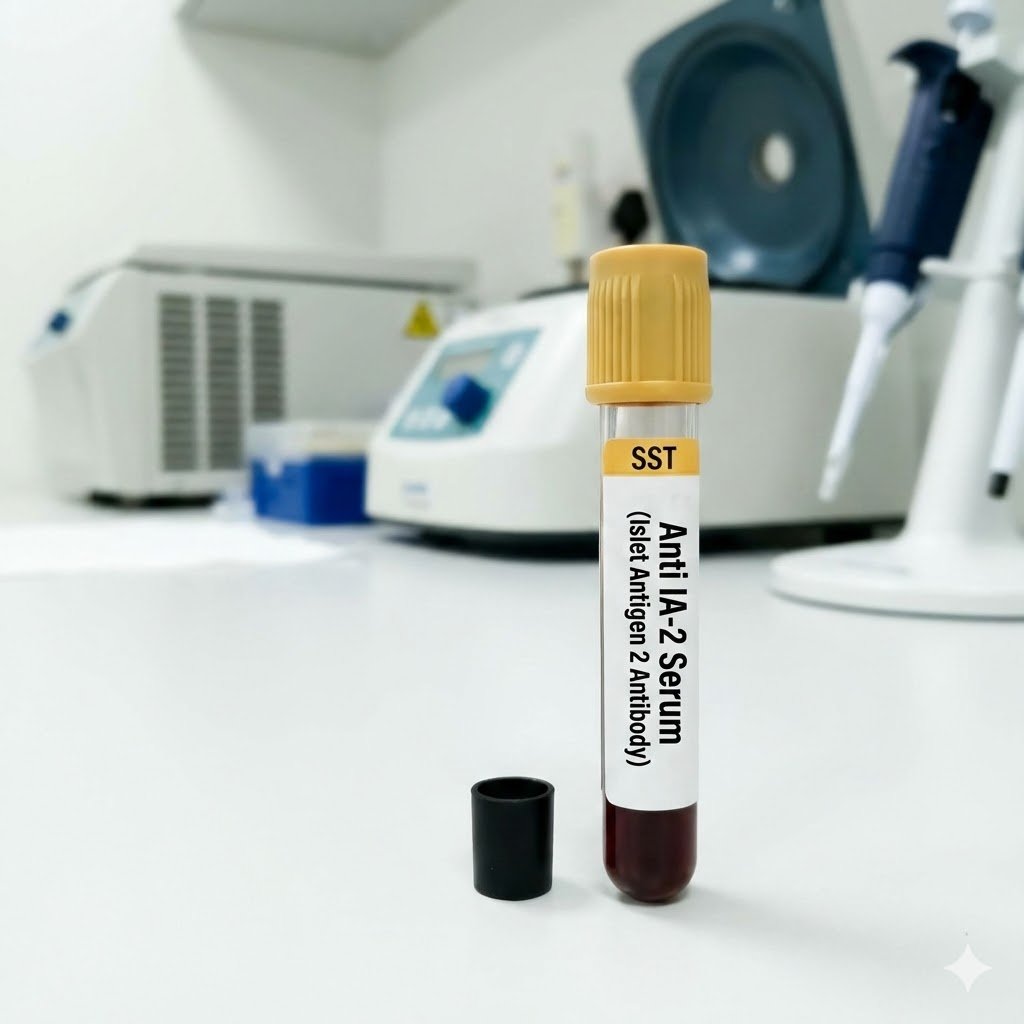
Specimen: Serum (Blood).
-
Container: Gold Top (SST) or Red Top Tube.
-
Preparation: No fasting is strictly required.
-
Note for Clinicians: Samples should ideally be collected prior to initiating plasma exchange (PLEX) or certain intravenous immunotherapies, which can reduce antibody levels.