Description
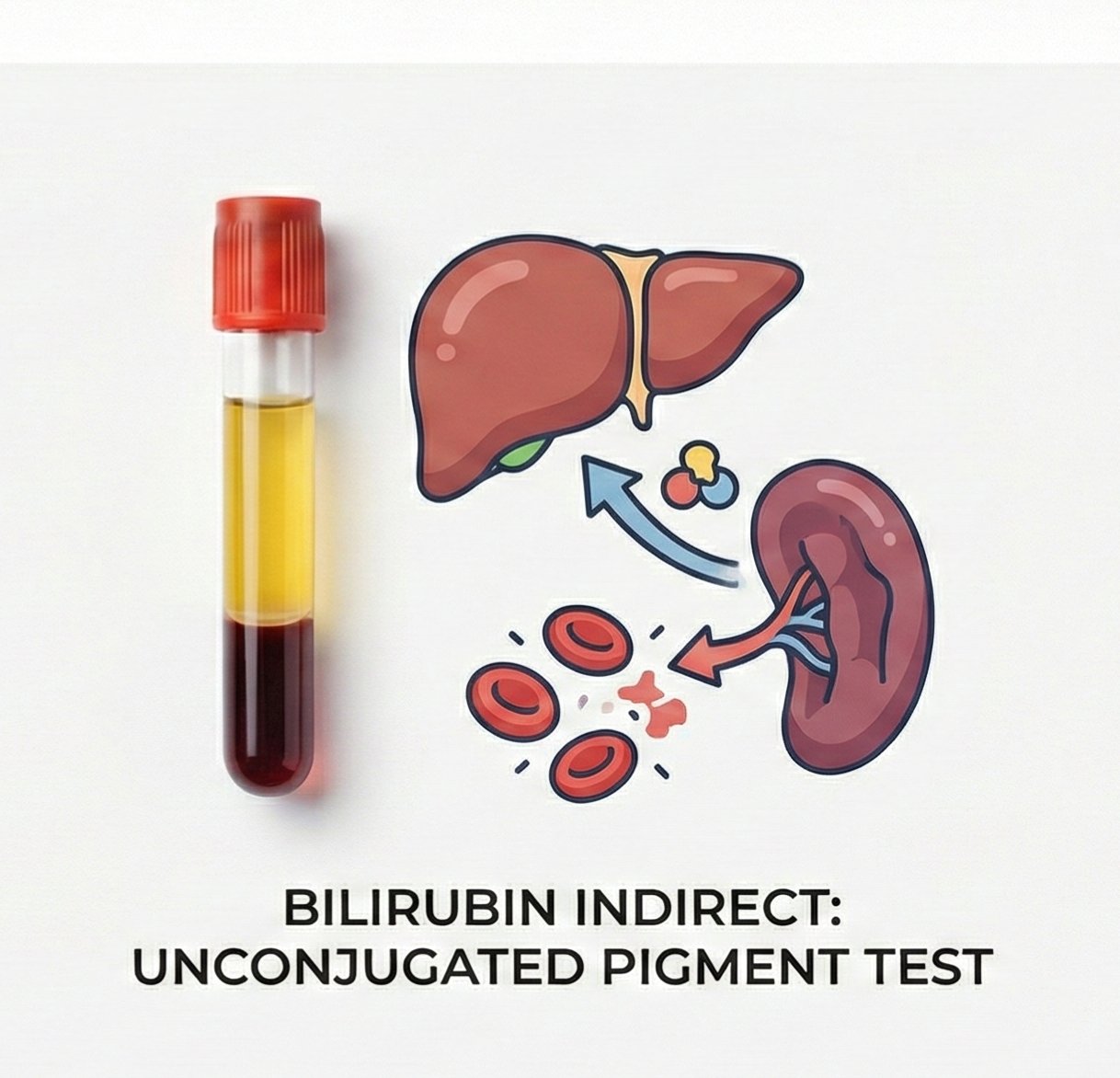
Indirect bilirubin is the unprocessed form of bilirubin produced after red blood cells break down. The liver later converts it to “direct bilirubin.” This test helps assess liver function, red blood cell breakdown, and certain inherited conditions.
Normal Range (Adults):
Indirect bilirubin: usually 0.2 – 0.8 mg/dL
(Ranges may slightly vary by lab)
When it increases (High Indirect Bilirubin): Common causes include:
Increased RBC destruction (hemolysis) – e.g., hemolytic anemia
Liver not processing bilirubin properly – e.g., hepatitis, severe liver dysfunction
Inherited disorders – like Gilbert’s syndrome
Newborn jaundice (physiological or pathological)
Symptoms when high may include:
- Yellowing of eyes/skin (jaundice)
- Dark urine uncommon in purely indirect elevation
- Fatigue, weakness (if anemia is involved)
Why doctors order it:
- To evaluate jaundice
- To differentiate liver disease vs hemolysis
- To monitor liver function
- To confirm inherited bilirubin disorders
Usually ordered along with:
- Total bilirubin
- Direct bilirubin
- Liver function tests (ALT, AST, ALP)
CBC if anemia suspected