Description
The Biopsy for AFB is a specialized tissue test used to detect the presence of mycobacteria, most commonly the bacteria that cause Tuberculosis (TB). It is crucial for diagnosing TB infections that occur outside the lungs (extrapulmonary TB), such as in the lymph nodes, bones, or skin.
While TB is typically associated with the lungs (pulmonary TB) and tested via sputum, the bacteria can infect almost any organ in the body. When a doctor suspects an infection in a tissue (like an enlarged lymph node or an unhealing skin lesion), a small sample is surgically removed. In the laboratory, this tissue undergoes a special staining process called an Acid-Fast Bacilli (AFB) stain. Under a microscope, the TB bacteria retain a bright red dye, making them visible to the pathologist.
Clinical Significance:
-
Targeted Diagnosis: Confirms active mycobacterial infections in tissues, which standard routine stains might miss.
-
Guiding Treatment: Accurate identification ensures the patient is started on the correct, long-term anti-tubercular therapy (ATT).
Sample Requirements:
-
Specimen: Tissue sample.
-
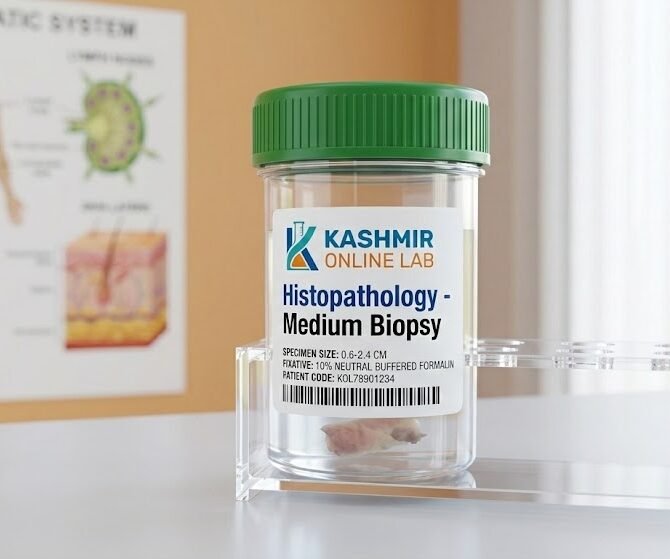
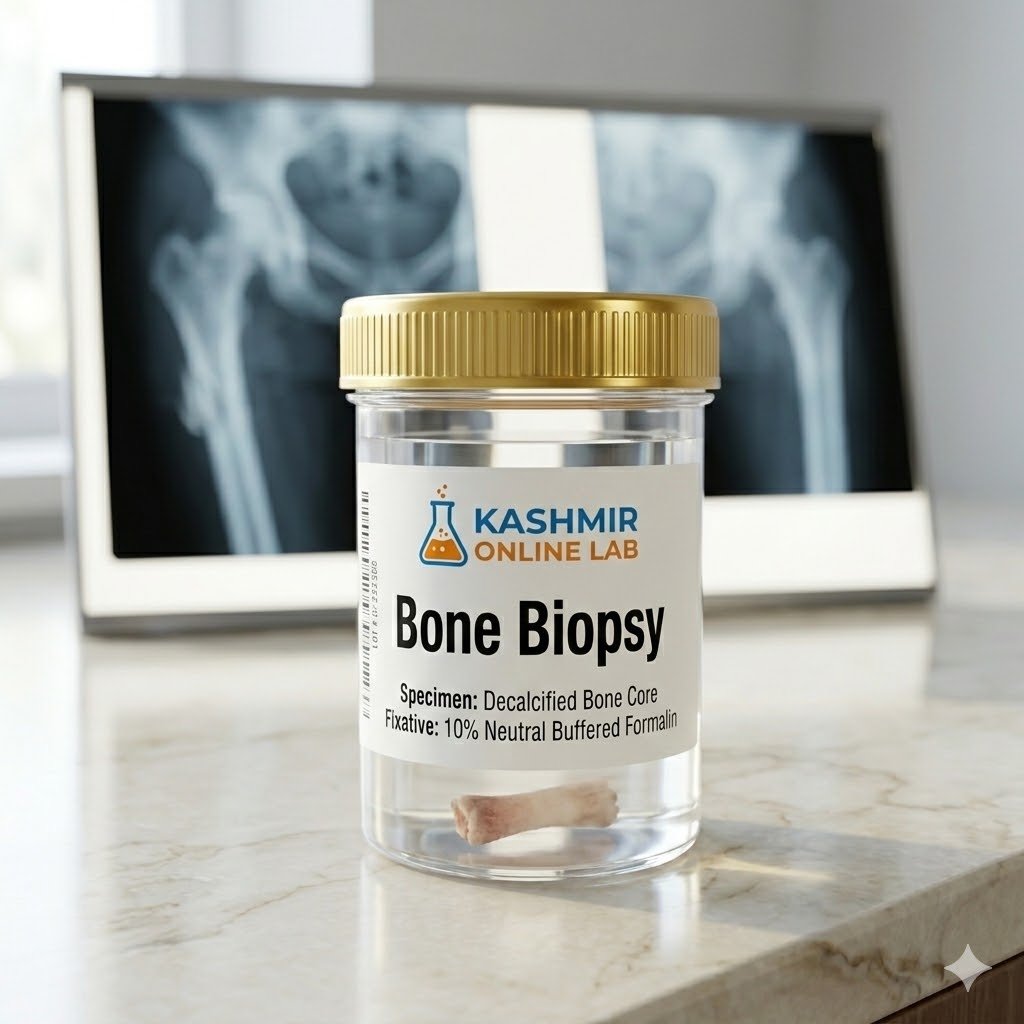
Container: Sterile container with 10% Neutral Buffered Formalin (for histopathology/staining) or Normal Saline (if an AFB culture is also requested simultaneously).
-
Preparation: Minor surgical procedure or fine needle aspiration is required to obtain the sample.