
Description
A Kidney Biopsy involves taking a tiny piece of kidney tissue for detailed microscopic analysis. It is essential for diagnosing the exact cause of unexplained kidney failure, severe protein in the urine, or to monitor the health of a transplanted kidney.
The kidney is a highly complex filter. When it malfunctions, blood tests show the decline, but only a tissue biopsy can reveal why. Kidney biopsies are uniquely complex because the tiny sample is often divided and evaluated using three different, highly specialized techniques: standard light microscopy, immunofluorescence (to look for immune system attacks), and electron microscopy (to view the ultra-structure of the kidney filters).
Clinical Significance:
-
Glomerular Diseases: Diagnoses conditions where the kidney’s filtering units are damaged, such as Lupus Nephritis or IgA Nephropathy.
-
Transplant Rejection: Crucial for determining if a patient’s body is rejecting a newly transplanted kidney, allowing doctors to adjust anti-rejection medications quickly.
Sample Requirements:
-
Specimen: Renal core (obtained via needle).
-
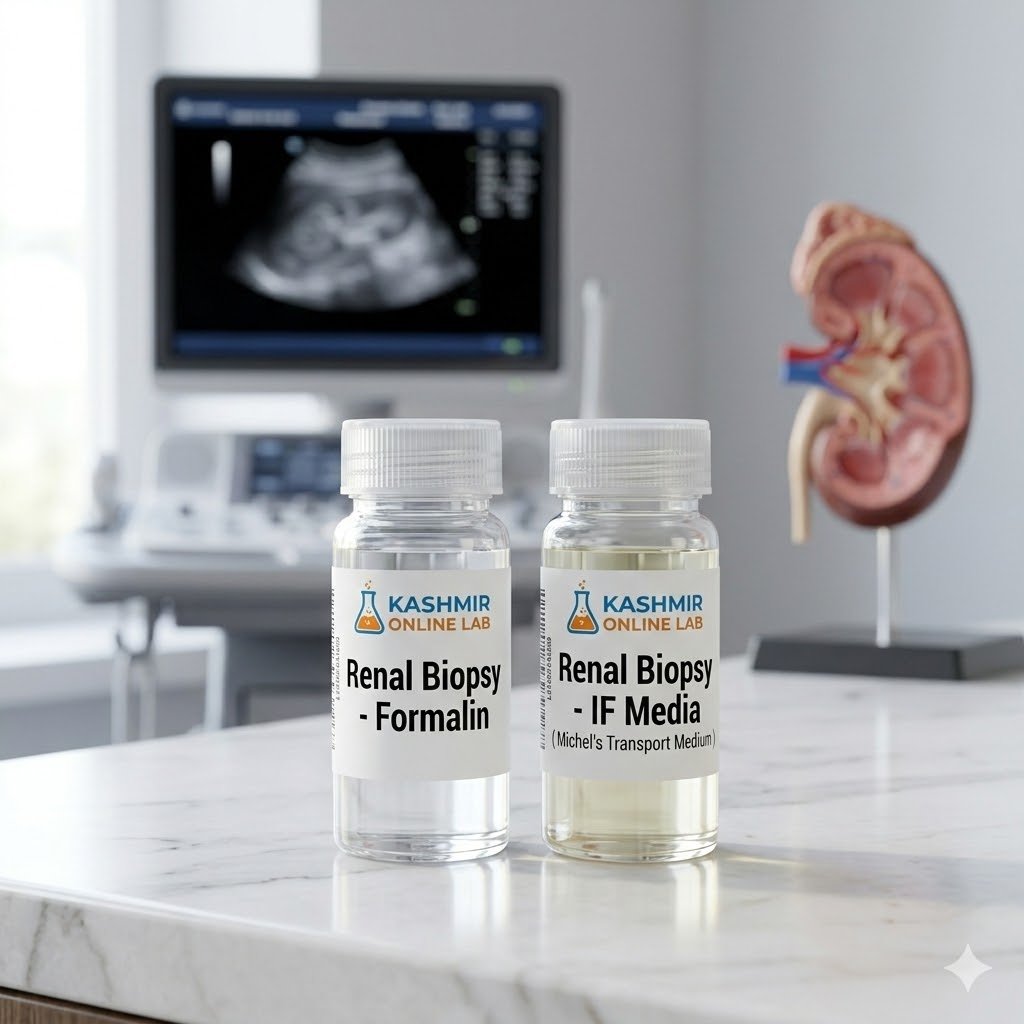
Container: Handling is extremely specific. One portion goes into 10% Formalin (for light microscopy), and another portion MUST go into a special transport medium like Michel’s Solution or Normal Saline (for immunofluorescence).
-
Preparation: Performed by a nephrologist or radiologist using an ultrasound-guided needle.