Description
Overview: A catheter culture is performed to detect and identify microorganisms (bacteria or fungi) that may be causing an infection in a patient with an indwelling catheter. The sample can be urine collected aseptically from the catheter port or the tip of the catheter itself, which is sent to the lab immediately after removal.
Clinical Significance:
-
Diagnosing Infection: It is the definitive test for diagnosing a Catheter-Associated Urinary Tract Infection (CAUTI) or a Central Line-Associated Bloodstream Infection (CLABSI).
-
Guiding Treatment: The culture not only identifies the specific pathogen but is also followed by Antibiotic Susceptibility Testing (AST). This is crucial for selecting the most effective antibiotic and preventing the overuse of broad-spectrum drugs.
-
Distinguishing Infection from Colonization: It helps differentiate between a true infection (which requires treatment) and simple colonization (presence of bacteria without symptoms), which often does not need antibiotics.
When is this test recommended?
-
When a catheterized patient develops symptoms of a urinary tract infection, such as fever, chills, flank pain, or cloudy/foul-smelling urine.
-
When a patient with a central line develops unexplained fever or other signs of sepsis.
-
Often performed before starting antibiotic therapy or upon removing a catheter that has been in place for a long time.
Sample Requirements:
-
Specimen:
-
Urine: Must be collected aseptically from the catheter’s sampling port using a sterile syringe. Never collect urine from the drainage bag for culture, as it is often contaminated.
-
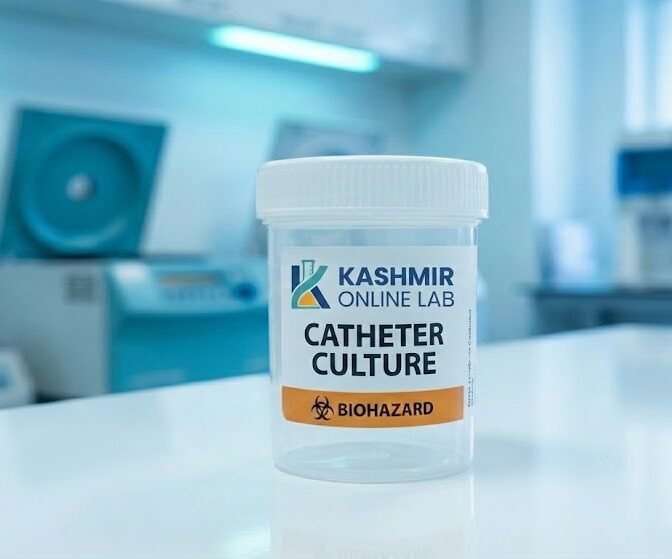
Catheter Tip: The tip (usually the last 5 cm) is cut off with sterile scissors immediately after removal and placed directly into a sterile container.
-
-
Container: Sterile, wide-mouth collection cup (for urine or tip).
-
Preparation: Strict aseptic technique is required during collection to prevent contamination from skin flora.