Description
Overview: Ceruloplasmin is a protein produced in the liver that binds and transports more than 95% of the copper in the blood. It also acts as an enzyme (copper oxidase) that helps the body regulate iron. Because it is an “acute-phase reactant,” levels can also rise during inflammation, infection, or pregnancy.
Clinical Significance:
-
Wilson’s Disease: This is the most critical use of the test. In Wilson’s disease, ceruloplasmin levels are typically significantly low, leading to toxic copper buildup in the body.
-
Copper Deficiency: Low levels can also result from malnutrition, malabsorption, or Menkes kinky hair syndrome.
-
Copper Toxicity: High levels of free copper (unbound to ceruloplasmin) can be toxic.
-
Inflammation: High ceruloplasmin levels may indicate active inflammation, infection, tissue injury, or certain cancers (e.g., leukemia, Hodgkin’s lymphoma).
When is this test recommended?
-
Suspected Wilson’s Disease: If a patient (often a child or young adult) presents with unexplained liver disease (jaundice), tremors, difficulty speaking/swallowing, or psychiatric changes.
-
Kayser-Fleischer Rings: If a doctor observes characteristic brown rings around the iris of the eye during an exam.
-
Copper Evaluation: To assess symptoms of copper deficiency, such as anemia, neutropenia (low white blood cell count), or osteoporosis.
Sample Requirements:
-
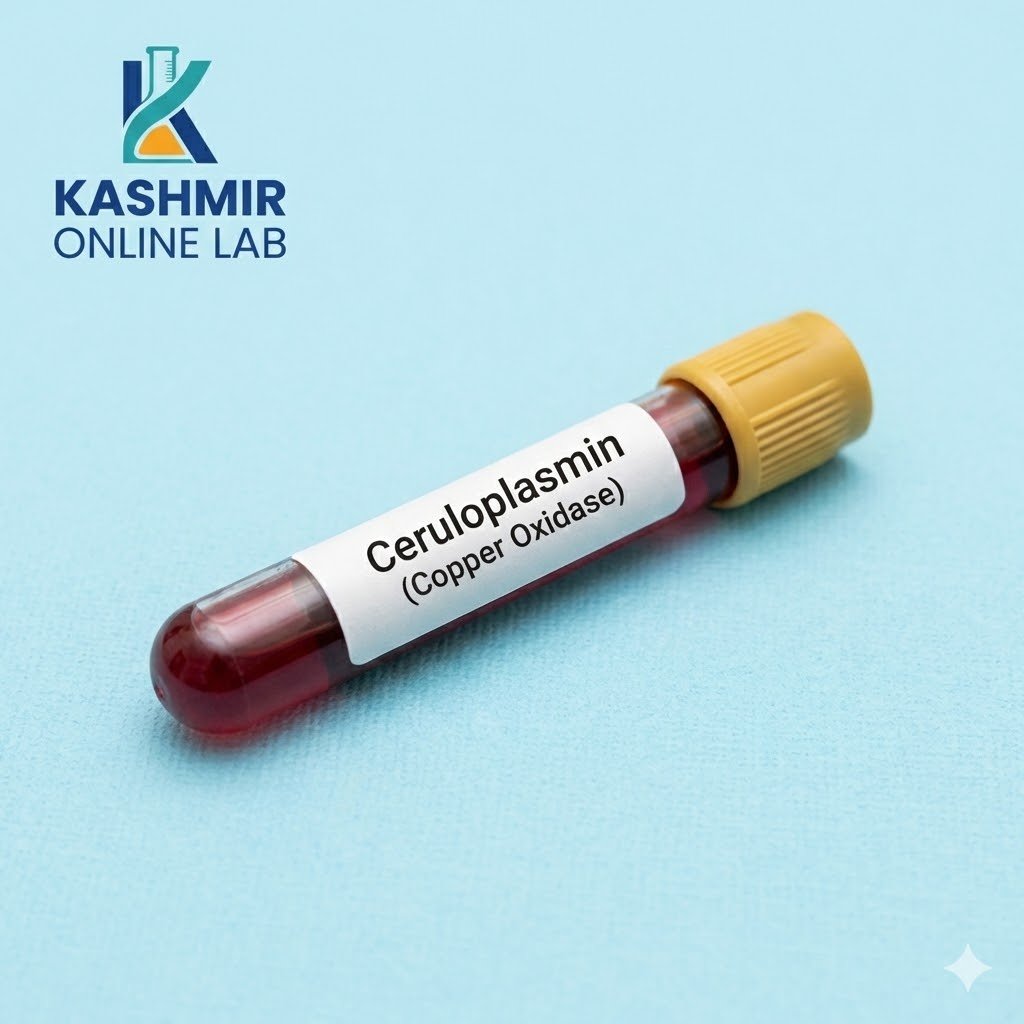
Specimen: Serum.
-
Container: Gold Top (SST) or Red Top Tube.
-
Preparation: No fasting is typically required, though some labs may recommend it.