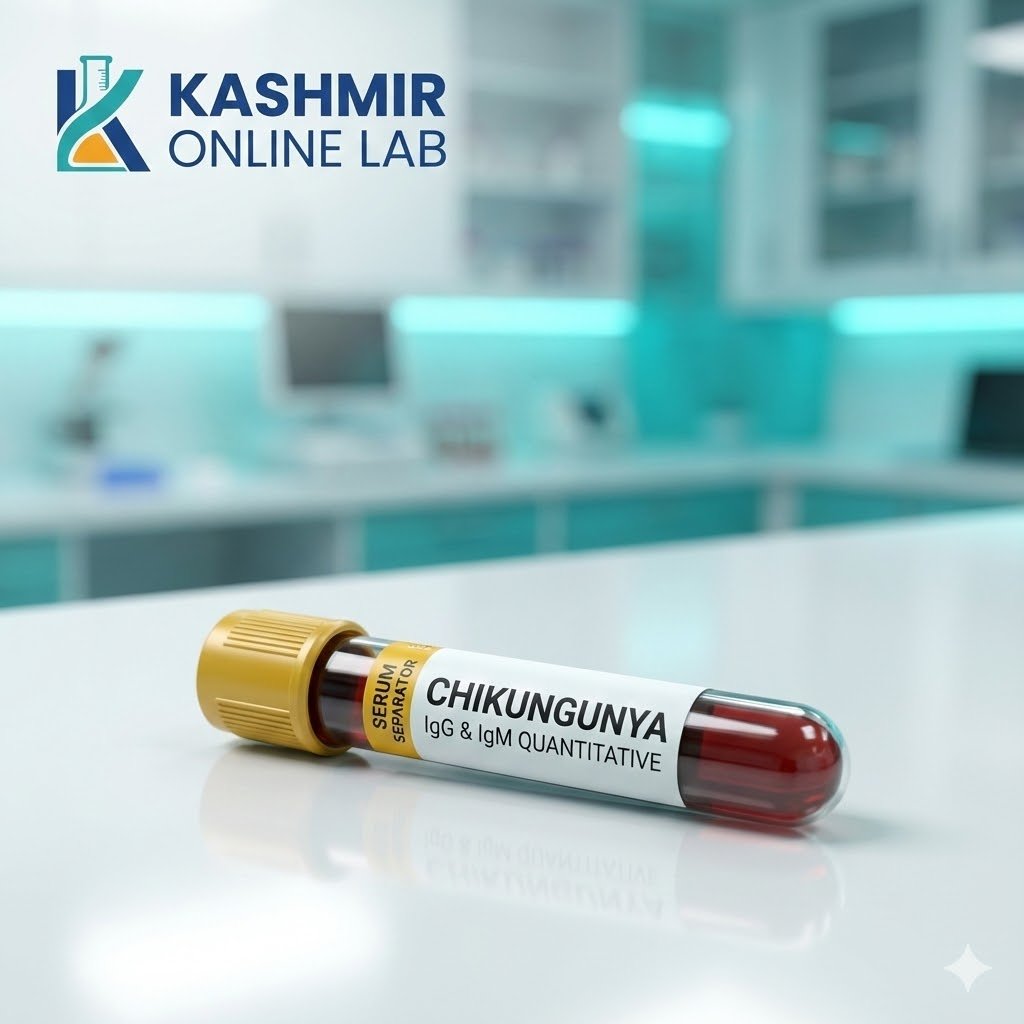
Description
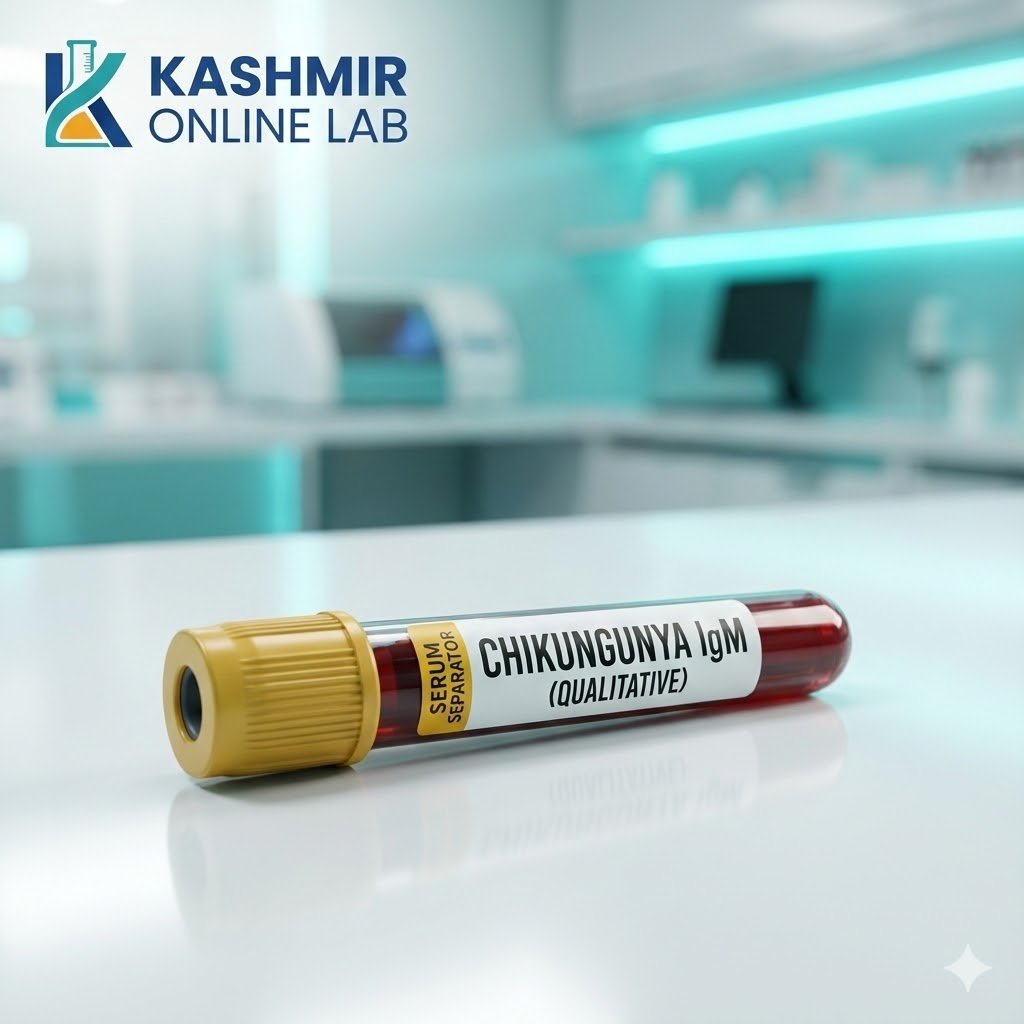
Overview: Chikungunya is a viral disease transmitted to humans by infected mosquitoes. The Chikungunya IgG & IgM Quantitative test measures the levels of two types of antibodies in the blood serum:
-
IgM Antibodies: These are the first antibodies produced by the body after infection, usually appearing 4-7 days after symptoms start. A high or rising level of IgM indicates a recent or current infection.
-
IgG Antibodies: These appear later, usually 10-14 days after the start of symptoms, and can persist for years. Their presence indicates a past infection and provides long-term immunity.
Clinical Significance: By measuring both IgG and IgM, doctors can determine the stage of the infection.
-
Positive IgM, Negative IgG: Suggests a very recent, acute infection.
-
Positive IgM, Positive IgG: Suggests a recent infection that is progressing.
-
Negative IgM, Positive IgG: Suggests a past infection and likely immunity.
-
Negative IgM, Negative IgG: Suggests no evidence of current or past infection, although it may be too early to detect antibodies if symptoms just began.
When is this test recommended?
-
To diagnose Chikungunya in patients presenting with characteristic symptoms like sudden high fever, severe joint pain (arthralgia), muscle pain, headache, and rash, especially those living in or returning from endemic regions.
-
To differentiate Chikungunya from other similar mosquito-borne diseases like Dengue or Zika virus.
Sample Requirements:
-
Specimen: Serum.
-
Container: Gold Top (SST) or Red Top Tube.
-
Preparation: No fasting is typically required.