Description
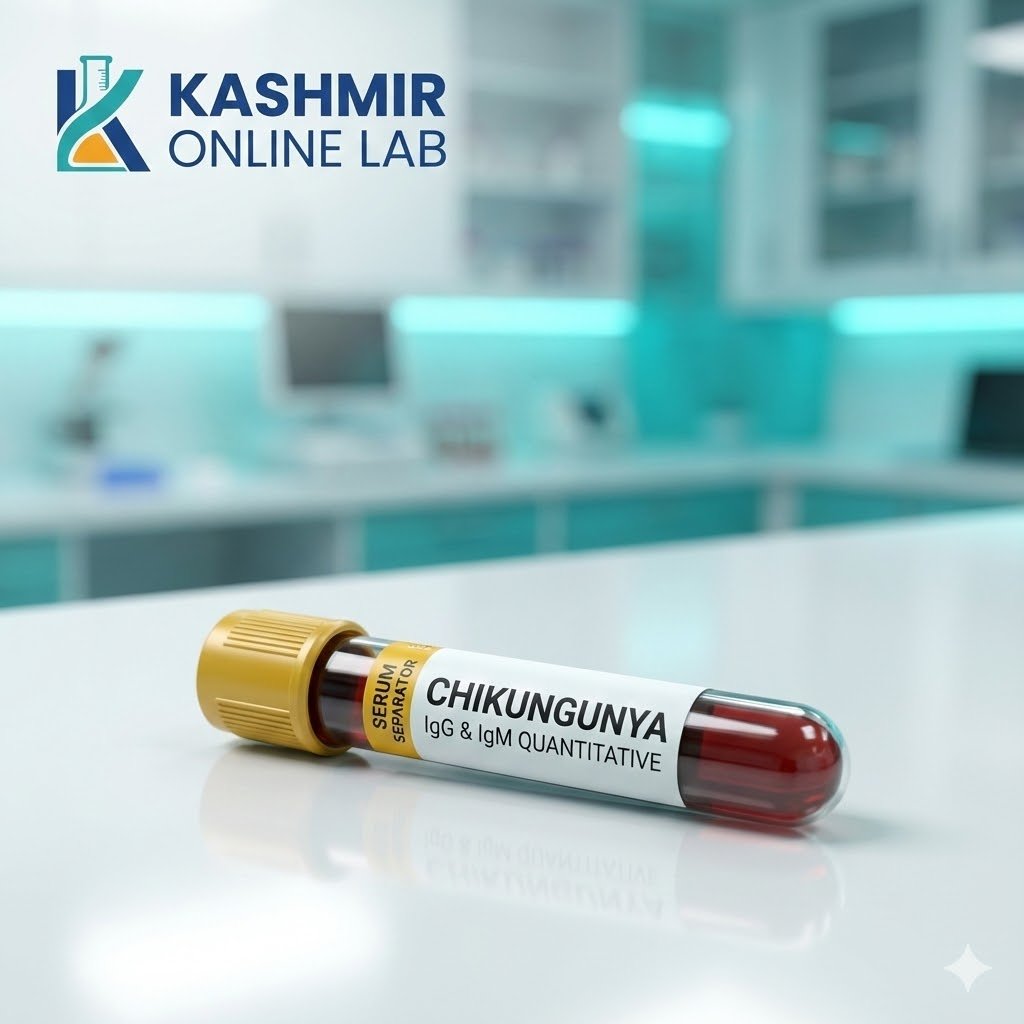
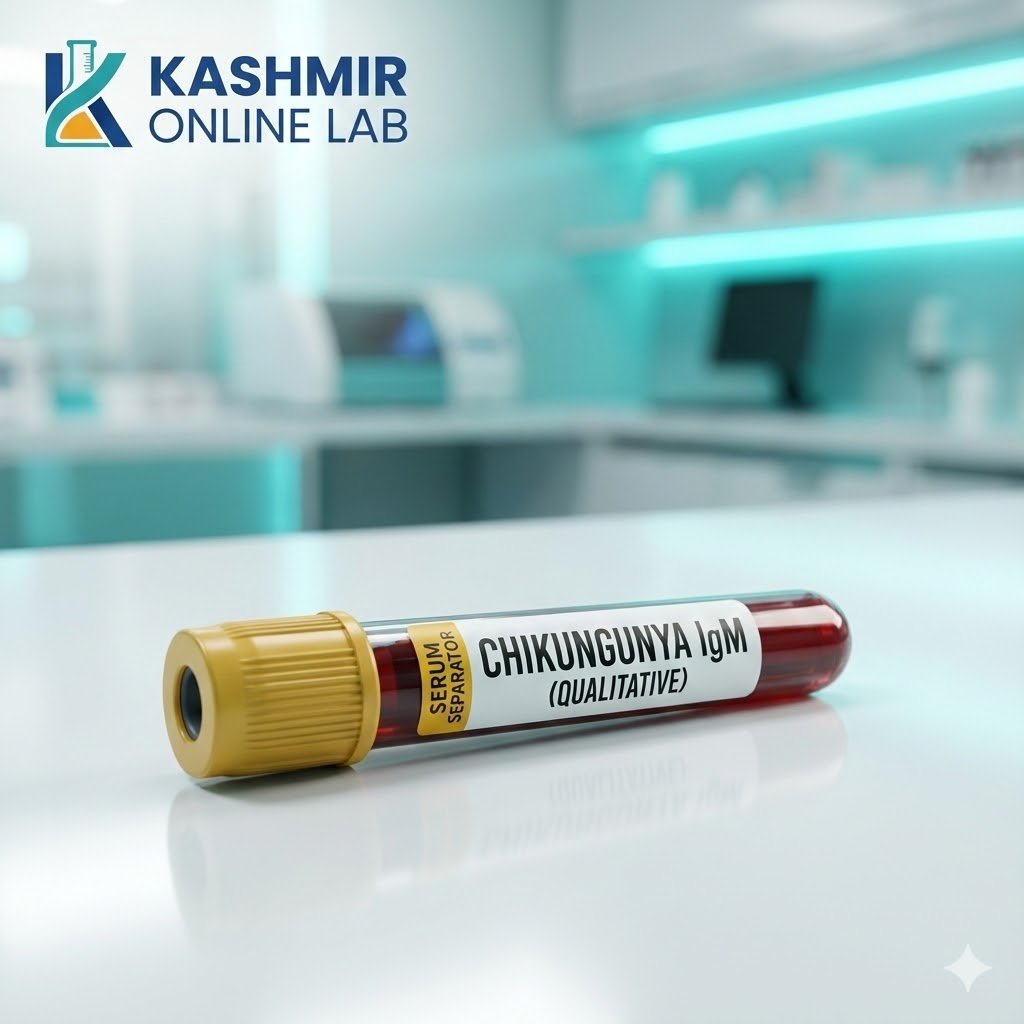
Overview: Chikungunya is a viral disease transmitted by infected mosquitoes, characterized by sudden fever and severe joint pain. The Chikungunya IgM (Qualitative) test detects the presence of IgM antibodies in the blood serum. These antibodies are typically the first to appear, usually 4 to 7 days after the onset of symptoms, and indicate a recent or current infection.
Clinical Significance: This qualitative test provides a “positive” or “negative” result.
-
Positive Result: Indicates the presence of IgM antibodies, suggesting a probable recent infection with the Chikungunya virus.
-
Negative Result: Indicates that IgM antibodies were not detected. This may mean there is no infection, or it may be too early in the course of the illness for antibodies to be detected.
When is this test recommended?
-
To help diagnose a Chikungunya virus infection in patients experiencing symptoms like high fever, joint swelling, muscle pain, and rash, particularly those in or returning from endemic areas.
-
To differentiate Chikungunya from other mosquito-borne illnesses with similar symptoms, such as Dengue or Zika virus.
Sample Requirements:
-
Specimen: Serum.
-
Container: Gold Top (SST) or Red Top Tube.
-
Preparation: No fasting is typically required.