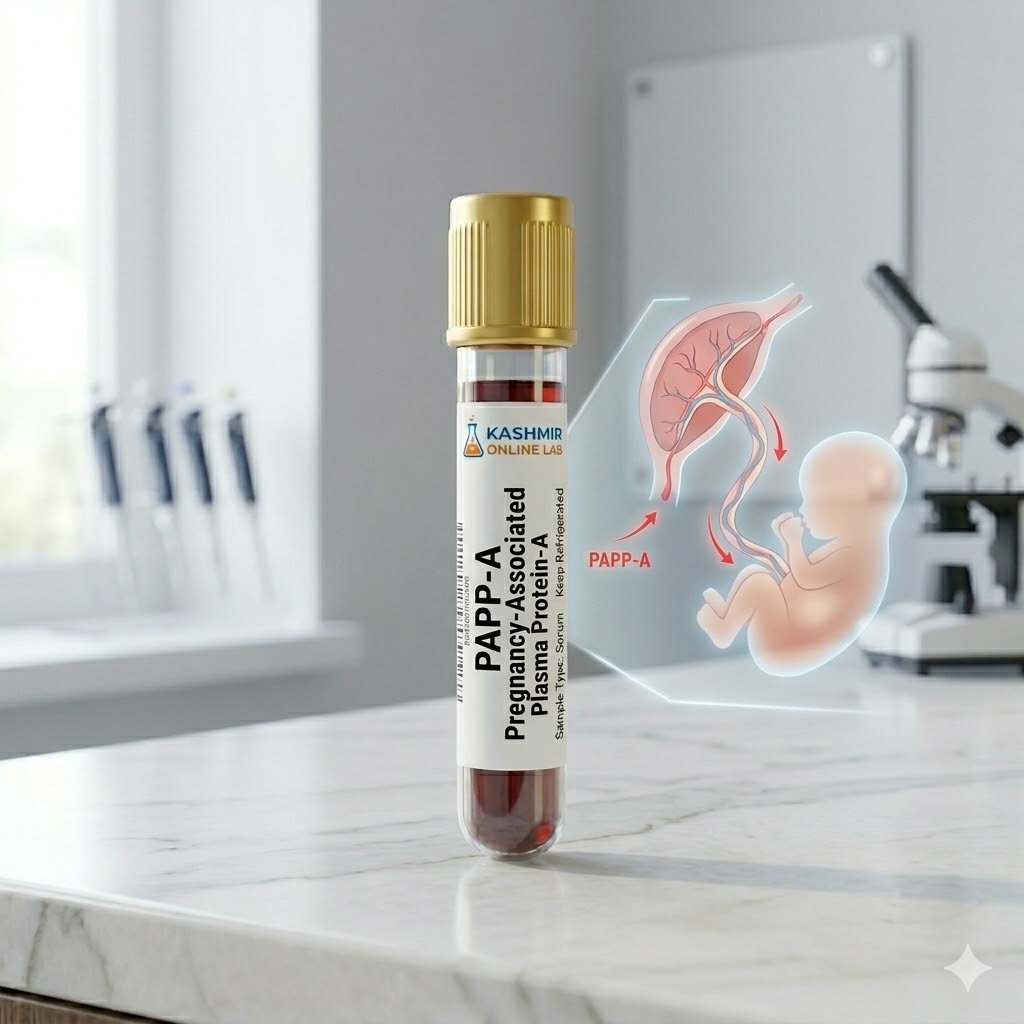

Description
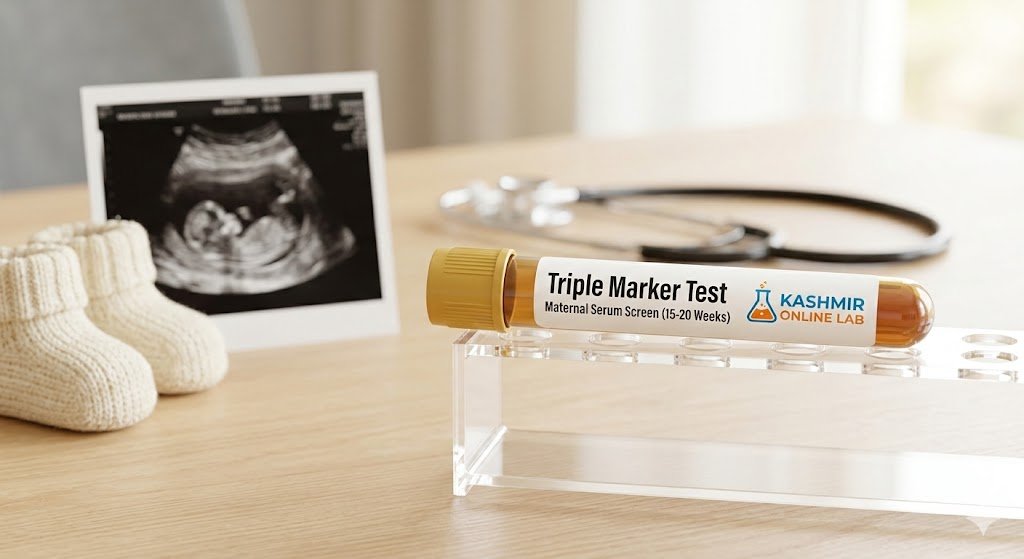
Overview: The “Quad Screen” improves upon the older “Triple Screen” by measuring four specific markers in the mother’s blood:
-
Alpha-fetoprotein (AFP): Produced by the baby’s liver.
-
Human Chorionic Gonadotropin (hCG): Produced by the placenta.
-
Unconjugated Estriol (uE3): Produced by the placenta and the baby’s liver.
-
Inhibin A: Produced by the placenta (this fourth marker increases the sensitivity of detecting Down Syndrome).
Clinical Significance:
-
Chromosomal Abnormalities: It calculates the statistical risk of Down Syndrome (Trisomy 21) and Edwards Syndrome (Trisomy 18).
-
Neural Tube Defects: High levels of AFP may indicate open neural tube defects, such as Spina Bifida (an opening in the spine) or Anencephaly.
-
Screening, Not Diagnosis: This is a screening test. A “positive” or “high-risk” result does not mean the baby has a problem; it simply means further diagnostic testing (like amniocentesis or high-resolution ultrasound) is recommended to confirm.
When is this test recommended?
-
Optimally performed between weeks 16 and 18 of pregnancy, though it can be done from week 15 to 20.
-
It is often recommended for women who missed the “First Trimester Screening” window.
-
For women aged 35 or older, or those with a family history of birth defects.
Sample Requirements:
-
Specimen: Serum (Blood).
-
Container: Gold Top (SST) or Red Top Tube.
-
Preparation: No fasting is required, but accurate information about the gestational age (weeks of pregnancy) is critical for valid results.