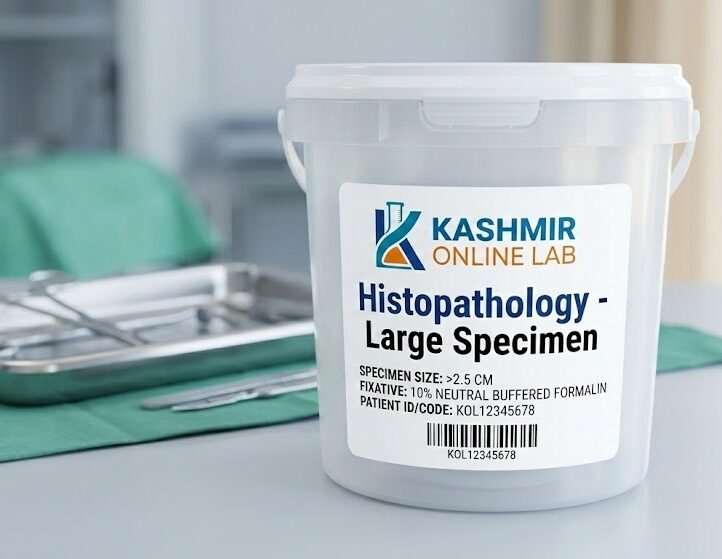
Description
The Large Biopsy test involves the comprehensive microscopic examination of a surgically removed tissue specimen that measures larger than 2.5 cm. This is typical for major surgical resections, such as the removal of whole organs, large tumors, or extensive cysts.
When a surgeon removes a substantial piece of tissue or an entire organ (like a gallbladder, uterus, or a large tumor mass), the entire specimen must be carefully analyzed by a pathologist. Because of the size, the pathologist performs a “gross examination” first—measuring, weighing, and describing the tissue—before taking multiple smaller sections from the most suspicious areas to view under a microscope.
Clinical Significance:
-
Cancer Staging: For malignant tumors, this analysis determines the exact type of cancer, how deep it has invaded, and whether the surgical margins are clear of cancer cells.
-
Definitive Diagnosis: Provides the final, conclusive diagnosis for complex surgical cases, guiding post-operative care and oncology treatment plans.
Sample Requirements:
-
Specimen: Large tissue mass or organ.
-
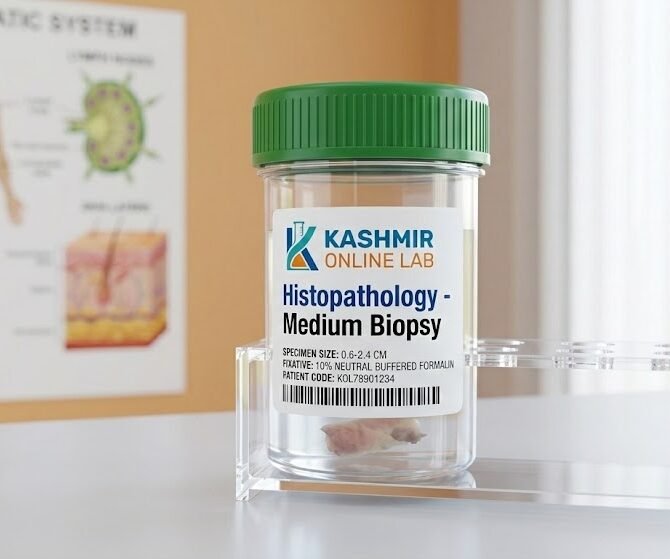
Container: A large, leak-proof, wide-mouth plastic container. The tissue must be completely submerged in 10% Neutral Buffered Formalin.
-
Preparation: Obtained via major surgery in an operating room.