Description
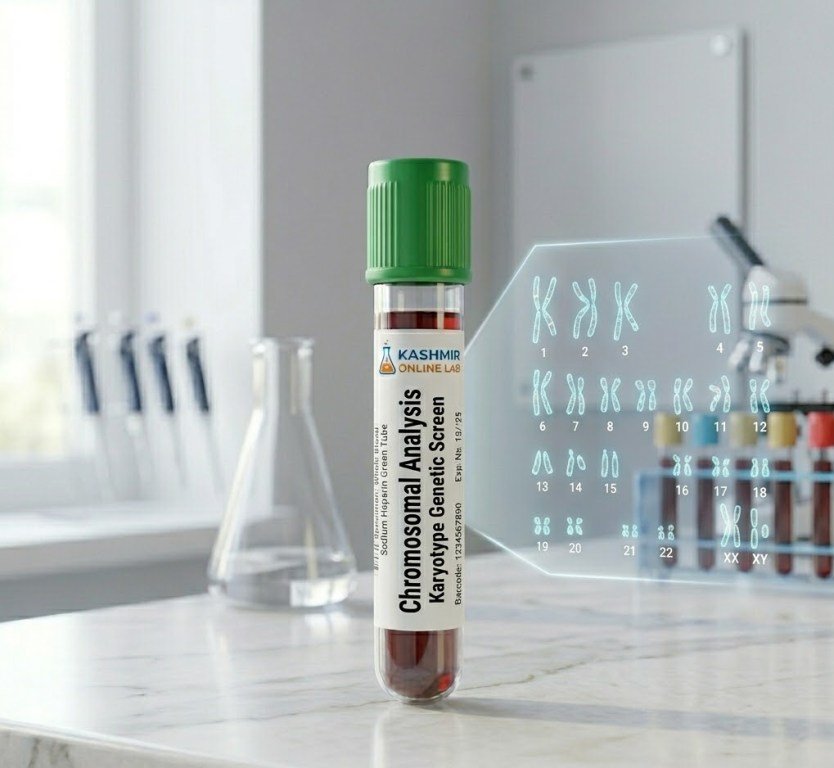
The Chromosomal Analysis (Karyotype) is a fundamental genetic blood test that evaluates the number and gross structure of a person’s chromosomes. It is primarily used to identify major chromosomal abnormalities—such as missing, extra, or rearranged genetic material—that can cause unexplained infertility, recurrent miscarriages, or congenital developmental disorders.
Inside almost every cell in your body, your DNA is tightly packaged into structures called chromosomes. A typical human has 46 chromosomes organized into 23 pairs (22 pairs of autosomes and one pair of sex chromosomes—XX for female, XY for male). A Karyotype test involves culturing living blood cells in the lab, arresting them while they are dividing, and taking a microscopic “snapshot.” The chromosomes are then arranged and analyzed by a cytogeneticist to look for large-scale structural errors.
Clinical Significance:
-
Identifying Numerical Abnormalities: Detects conditions caused by whole extra or missing chromosomes, such as Down syndrome (Trisomy 21), Klinefelter syndrome (47, XXY), or Turner syndrome (45, X).
-
Detecting Structural Rearrangements: Identifies issues like balanced translocations or inversions. In these cases, a person has the correct total amount of DNA, so they may be perfectly healthy themselves. However, because the DNA is “rearranged,” they have a high risk of producing sperm or eggs with unbalanced genetics, leading to severe infertility or recurrent pregnancy loss.
-
Family Planning: Essential for couples undergoing advanced fertility treatments (like IVF) or those who have suffered multiple unexplained miscarriages.
When is this test recommended?
-
Recurrent Pregnancy Loss: A standard workup for both partners after two or more consecutive miscarriages.
-
Unexplained Infertility: Cases of severe oligospermia/azoospermia in men, or premature ovarian failure in women.
-
Suspected Genetic Syndromes: If a patient exhibits physical or developmental traits indicative of a chromosomal disorder.
Sample Requirements:
-
Specimen: Whole Blood.
-
Container: Green Top (Sodium Heparin) Tube. Crucial Note: Unlike most genetic DNA tests that use purple EDTA tubes, a karyotype requires living, dividing white blood cells. Sodium Heparin prevents clotting while keeping the cells alive.
-
Preparation: No fasting is required.
-
Handling: The sample MUST be maintained at room temperature and transported to the laboratory quickly. Refrigerating or freezing the sample will kill the cells and make the test impossible to perform.