Description
The Lipid Profile is your primary “Heart Health” check. It measures the amount of cholesterol and fats (triglycerides) in your blood. This test is essential for assessing your risk of blocked arteries, heart disease, and stroke.
The Lipid Profile is your primary “Heart Health” check. It measures the amount of cholesterol and fats (triglycerides) in your blood. This test is essential for assessing your risk of blocked arteries, heart disease, and stroke.
Long Description
(Best for website content, patient information brochures, or lab reports)
Overview: Cholesterol is a waxy fat that your body needs, but too much of it can clog your arteries. The Lipid Profile breaks down this fat into specific categories to give a complete picture of your cardiovascular health. The standard panel includes:
-
-
Total Cholesterol: The overall sum of cholesterol in your blood.
-
HDL (High-Density Lipoprotein): The “Good” cholesterol. It helps remove bad cholesterol from your arteries. Higher levels are better.
-
LDL (Low-Density Lipoprotein): The “Bad” cholesterol. It builds up in artery walls (plaque), leading to blockages. Lower levels are better
-
-
Triglycerides: A type of fat from the food we eat (especially sugar and carbs). High levels are linked to heart disease and diabetes.
-
VLDL (Very Low-Density Lipoprotein): Another type of “bad” cholesterol that carries triglycerides.
Clinical Significance:
-
Heart Disease Risk: High LDL and Triglycerides are the main drivers of Coronary Artery Disease (CAD) and heart attacks.
-
Stroke Prevention: Clogged arteries in the neck or brain can lead to stroke; this test helps identify that risk early.
-
Pancreatitis: Extremely high triglyceride levels can cause painful inflammation of the pancreas.
-
Monitoring Treatment: Used to check if cholesterol-lowering medicines (Statins) are working.
When is this test recommended?
-
Routine Screening: Every adult over 20 should get this tested every 4-6 years.
-
Risk Factors: If you smoke, are overweight, have high blood pressure, diabetes, or a family history of heart disease.
-
Diet Monitoring: To see how changes in your diet are improving your health.
Sample Requirements:
-
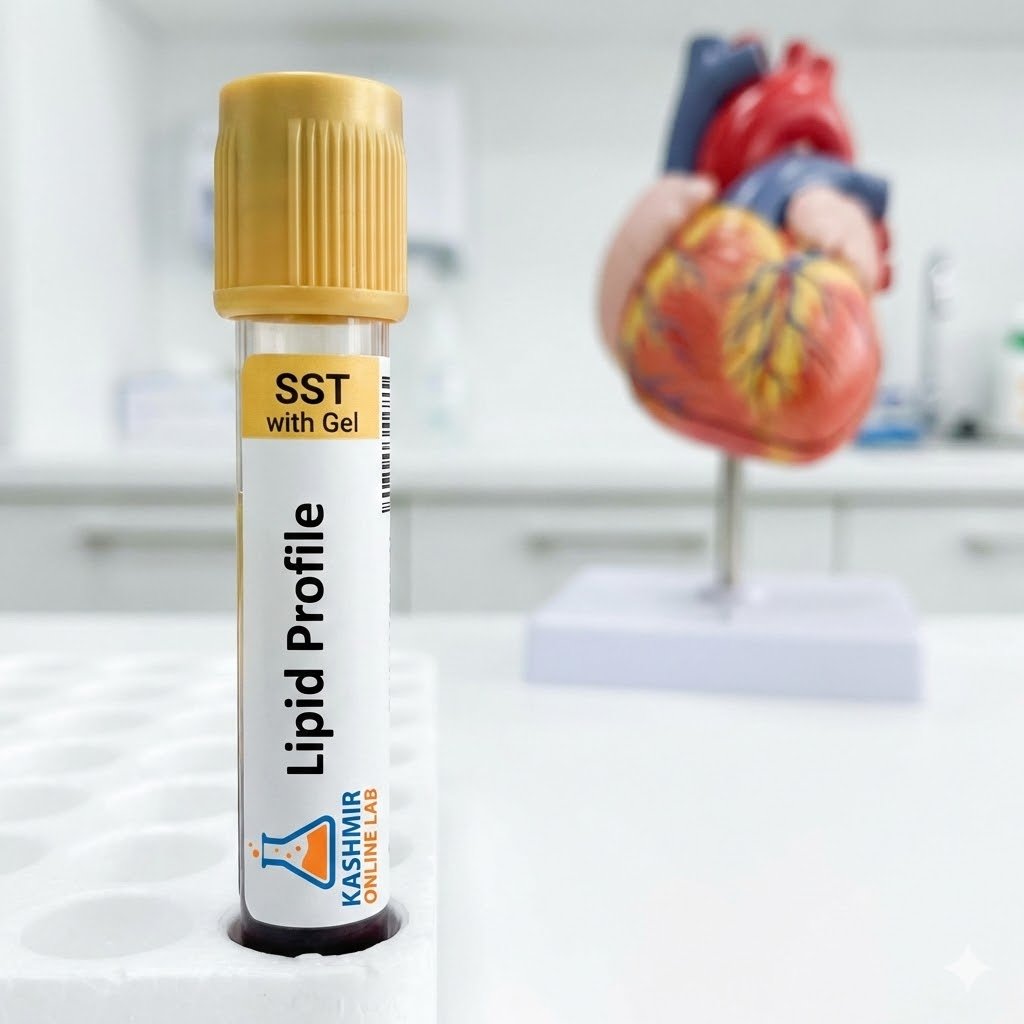
Specimen: Serum (Blood).
-
Container: Gold Top (SST) or Red Top Tube.
-
Preparation: Strict Fasting (10-12 hours) is highly recommended. You should drink only water during this time. Eating even a small amount of food can falsely spike your Triglyceride levels.