Description
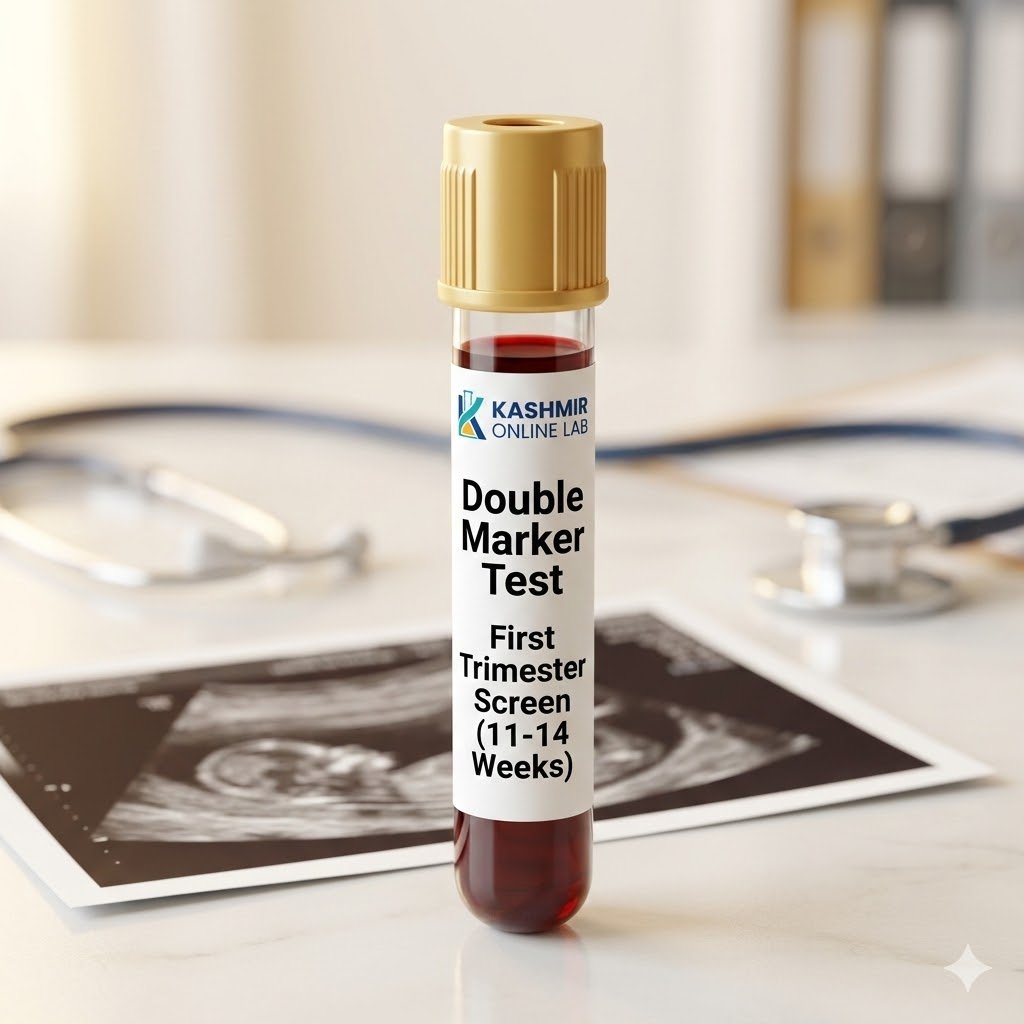
The Double Marker Test is a crucial early pregnancy screening done in the first trimester (between 11 and 14 weeks). It combines a simple maternal blood test with an ultrasound to assess the risk of the baby having chromosomal abnormalities, such as Down syndrome.
Overview: The Double Marker test is the standard first step in prenatal genetic screening. It is designed to evaluate the statistical risk of certain chromosomal disorders early in the pregnancy. For the most accurate results, this blood test is always paired with a specific ultrasound called a Nuchal Translucency (NT) scan, which measures the fluid at the back of the baby’s neck.
What is measured (The “Double” Markers):
-
Free Beta-hCG (Human Chorionic Gonadotropin): A hormone produced by the placenta. Abnormally high or low levels can indicate a chromosomal issue.
-
PAPP-A (Pregnancy-Associated Plasma Protein A): A protein produced by the placenta in early pregnancy. Low levels are often associated with an increased risk of Down syndrome.
Clinical Significance:
-
Chromosomal Abnormalities: Primarily screens for the risk of Down syndrome (Trisomy 21) and Edwards syndrome (Trisomy 18).
-
Early Reassurance: Because it is performed early in the pregnancy, it gives parents and doctors a head start on understanding the baby’s health.
-
Guiding Next Steps: A “high-risk” result is not a diagnosis. It simply means that further, more definitive testing (like NIPT or Chorionic Villus Sampling) is recommended to know for sure.
When is this test recommended?
-
Strict Timing: It must be performed between 11 weeks and 13 weeks 6 days of pregnancy. Outside this window, the hormone levels cannot be accurately compared to standard benchmarks.
-
Routine Care: It is highly recommended by gynecologists for all pregnant women, regardless of age or family history.
Sample Requirements:
-
Specimen: Serum (Maternal Blood).
-
Container: Gold Top (SST) or Red Top Tube.
-
Preparation: No fasting is required.
-
Crucial Data Required: The laboratory cannot generate a report without the results of your NT Scan (ultrasound). You must provide the exact gestational age, the NT measurement in millimeters, and the mother’s details (age, weight, diabetic status, and smoking status) at the time of sample collection.